 Save
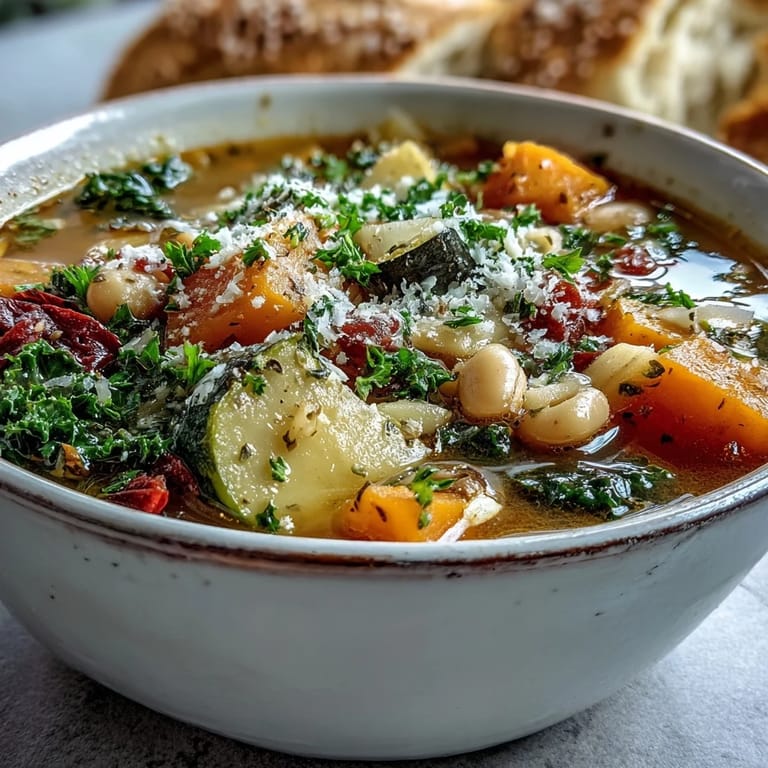
Save There's something about November that makes me crave a pot of minestrone—that precise moment when the farmers market switches from summer abundance to sturdy winter vegetables. My neighbor once described hers as "edible comfort," and I finally understood what she meant when a steaming bowl of this soup arrived on my doorstep during a particularly gray week. The butternut squash melts into sweetness, the kale holds its earthy integrity, and somehow the whole thing tastes like someone who cares made it just for you.
I made this soup for my book club on a Wednesday night when I realized at 4 PM that I'd volunteered to bring dinner and had no plan. Forty minutes later, six bowls were empty and someone asked for the recipe before they'd even finished eating—that's when I knew this one was worth keeping close.
Ingredients
- Olive oil (2 tablespoons): Quality matters here since it's one of the few fats carrying flavor; it'll coat your vegetables and build the aromatic foundation.
- Yellow onion (1 medium, diced): The backbone of every good soup—give it time to soften and turn translucent before rushing ahead.
- Carrots (2, sliced): They add natural sweetness and visual warmth; don't peel them if they're fresh from a farmers market.
- Celery stalks (2, sliced): This is the silent partner that nobody talks about, but it's what makes the broth taste rounded and complete.
- Garlic cloves (3, minced): Fresh garlic makes an enormous difference; jarred won't give you that same fragrant moment when it hits the oil.
- Butternut squash (3 cups, peeled and cubed): This is where the soup gets its soul—the cubes soften into silky clouds while staying distinct enough to bite through.
- Zucchini (1 medium, diced): It's mild and absorbs the surrounding flavors; add it later so it doesn't turn mushy.
- Diced tomatoes (1 can, 14 oz): The acidity brightens everything and prevents the soup from tasting one-note and heavy.
- Kale (4 cups, stems removed and leaves chopped): It holds its texture better than spinach and adds a subtle bitterness that balances the sweetness of the squash.
- Cannellini beans (1 can, drained and rinsed): They add protein and creaminess without any dairy; rinsing them removes excess sodium.
- Small pasta like ditalini (1 cup): Cook it separately if you're making this soup ahead, or add it fresh when serving to prevent it from bloating into mush.
- Vegetable broth (6 cups): This is your liquid foundation—taste it before you buy it, and choose one you'd actually drink on its own.
- Bay leaf (1): It whispers in the background, adding something indefinable that makes people ask what the secret is.
- Dried oregano, thyme, and rosemary (1 teaspoon oregano, 1 teaspoon thyme, 1/2 teaspoon rosemary): These Italian herbs are non-negotiable; they transform vegetables into something that tastes like it traveled through time.
- Salt and pepper: Always season at the end after tasting, never at the beginning.
Tired of Takeout? 🥡
Get 10 meals you can make faster than delivery arrives. Seriously.
One email. No spam. Unsubscribe anytime.
Instructions
- Build your aromatic base:
- Heat olive oil in a large pot over medium heat, then add onion, carrots, and celery. Let them sauté for about 5 minutes, stirring occasionally until the onions turn translucent and everything smells like the start of something good. You'll notice the kitchen fills with warmth before you even add broth.
- Awaken the garlic:
- Stir in your minced garlic and cook for just 1 minute—you're looking for that moment when it stops being sharp and becomes fragrant. Don't let it brown or it'll turn bitter and regret will set in.
- Introduce the squash:
- Add the butternut squash cubes and diced zucchini, stirring to coat them in oil. Cook for another 5 minutes, letting the vegetables get to know each other before the liquid arrives.
- Pour in the heart of the soup:
- Add your diced tomatoes, vegetable broth, bay leaf, and all three dried herbs. Stir well and bring everything to a boil—you'll see the surface come alive with bubbles. Once it reaches that rolling boil, reduce heat to a simmer and cover the pot.
- Let the squash soften:
- Simmer covered for about 15 minutes, until the butternut squash is tender enough to break with a wooden spoon but still holds its shape. This is when you can step back, pour yourself tea, and let the oven do the thinking.
- Bring the finale together:
- Add your drained cannellini beans, pasta, and chopped kale. Stir gently and simmer uncovered for 10 to 12 minutes until the pasta is tender and the kale has softened into dark, silky pieces. Taste as you go—pasta continues cooking after you remove it from heat.
- Final seasoning and serving:
- Fish out the bay leaf with a spoon, then taste and season generously with salt and pepper. Ladle into bowls and top with Parmesan and fresh parsley if you're using them, then serve alongside crusty bread for soaking up every last drop.
 Save
Save There was a moment last winter when my daughter came home from school complaining about everything, and one spoonful of this soup seemed to reset her entire mood. She asked me to make it again the next night, and the night after that, until it became our quiet ritual—no talking required, just the sound of spoons and the steam rising between us.
The Magic of Winter Vegetables
Butternut squash is one of those vegetables that seems humble until it melts into a soup and suddenly tastes like it's been caramelized for hours. The sweetness it brings doesn't require sugar or honey—it's already there, waiting to balance the earthiness of kale and the brightness of tomatoes. When you choose vegetables that are in season, they do half the work for you, and this soup becomes effortless.
Making It Your Own
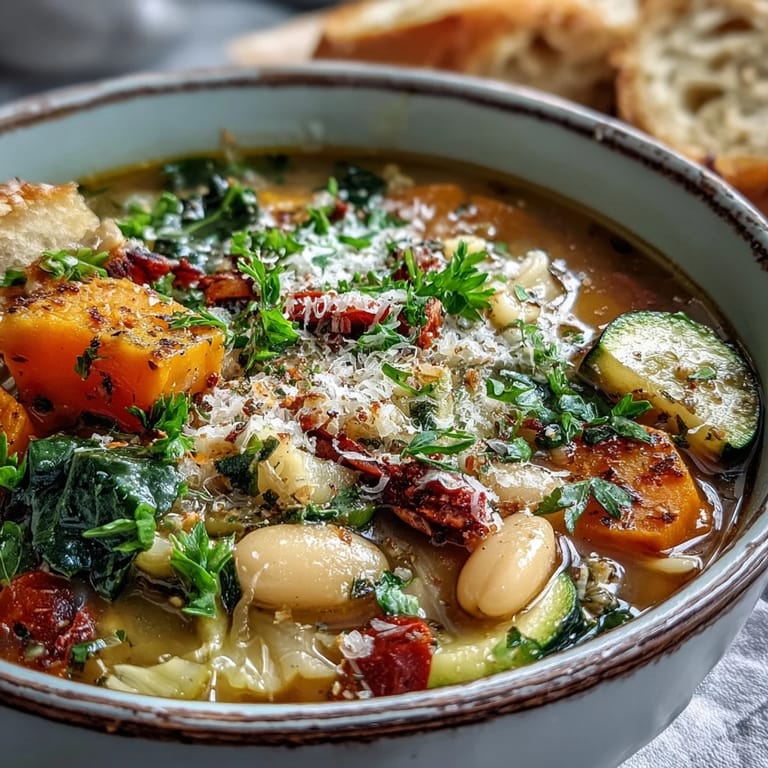
The beauty of minestrone is that it's forgiving and almost expects improvisation. I've made it with spinach when kale wasn't available, swapped the zucchini for green beans, and once added a handful of frozen peas because they were sitting in my freezer looking lonely. Each version tastes slightly different but equally satisfying, like the soup adapts to whatever your kitchen has to offer.
Storage and Serving Wisdom
This soup keeps beautifully in the refrigerator for up to five days and actually improves as the flavors meld and deepen. It also freezes exceptionally well—I store mine in individual containers so I can pull out a single serving on nights when cooking feels too ambitious. The pasta may absorb liquid over time, so don't hesitate to add a splash of broth when reheating if it seems too thick.
- Make a double batch and freeze half in portions for those moments when you need comfort food without effort.
- Serve it in wide bowls with plenty of crusty bread—this soup is meant to be eaten slowly and savored.
- If you're dairy-free, the soup stands completely on its own without cheese, though a drizzle of good olive oil at the end is never wasted.
 Save
Save This soup tastes like you spent all afternoon cooking when you actually spent forty minutes. That's the kind of everyday magic that keeps me coming back to my kitchen.
Recipe FAQs
- → Can I make this minestrone ahead of time?
Yes, this soup actually tastes even better the next day as the flavors meld together. Store it in an airtight container in the refrigerator for up to 4 days. Note that the pasta may absorb some liquid, so you may need to add extra broth when reheating.
- → What can I substitute for butternut squash?
You can use sweet potato, pumpkin, or even additional zucchini. Any winter squash variety works well. Just ensure the pieces are cut to similar sizes for even cooking.
- → How do I make this soup heartier?
Add more beans or pasta, include diced potatoes, or stir in cooked Italian sausage for a meatier version. You can also increase the variety of vegetables by adding green beans or peas.
- → Can I freeze leftover minestrone?
Yes, but it's best to freeze the soup before adding the pasta, as pasta can become mushy when frozen and reheated. Freeze the base for up to 3 months, then cook fresh pasta when you reheat the soup.
- → What type of pasta works best in minestrone?
Small pasta shapes like ditalini, elbow macaroni, small shells, or orzo work perfectly. They're easy to eat with a spoon and distribute well throughout the soup. Avoid long pasta like spaghetti.
- → How can I add more flavor to the broth?
Add a Parmesan rind while simmering for extra umami depth. You can also include a splash of red wine when sautéing the vegetables, or finish with a drizzle of quality olive oil and fresh lemon juice before serving.