 Save
Save There's something about the smell of onions turning golden in butter that makes a kitchen feel like home, even if you've never been there before. My first real encounter with French onion soup wasn't at a bistro in Paris, but in my own kitchen on a gray afternoon when I had nothing but time and a pile of onions that needed using. What struck me wasn't just how good it tasted, but how the whole process felt like magic—watching those pale rings transform into something sweet and deeply savory with just heat and patience. A Dutch oven made it all happen without fuss, and I've been making it ever since.
I made this for my neighbor last winter when she mentioned feeling homesick, and watching her take that first spoonful—the way her shoulders relaxed and her eyes closed—reminded me why this soup matters. It's not complicated food, but it's honest, and sometimes that's exactly what people need to feel a little less alone.
Ingredients
- Large yellow onions, thinly sliced: Use a sharp chef's knife and take your time slicing—uniform thickness means they caramelize evenly, and honestly, there's something meditative about it.
- Unsalted butter and olive oil: The butter brings richness while the oil keeps things from burning during that long caramelization, a combination I learned the hard way.
- Garlic cloves, minced: Just a little bit, added after the onions soften so it doesn't scorch and turn bitter.
- Sugar: A teaspoon helps draw out the onions' natural sweetness and speeds up caramelization without making anything taste sugary.
- Beef broth: Use good quality broth if you can—it's the backbone of the whole soup and makes a real difference in depth.
- Dry white wine: Don't use cooking wine; use something you'd actually drink, and deglaze that pot properly to capture all those caramelized bits.
- Fresh thyme and bay leaves: These herbs keep the soup grounded and French-tasting without overwhelming anything else.
- Worcestershire sauce: A tablespoon adds umami and savory depth; vegetarians can skip it or use a plant-based version.
- Baguette slices: Slice them yourself if possible—store-bought croûtes can get too hard, and homemade toasting gives you control.
- Gruyère cheese, grated: This is where the magic lives; it melts beautifully and has a nutty flavor that plays perfectly with the sweet onions.
Tired of Takeout? 🥡
Get 10 meals you can make faster than delivery arrives. Seriously.
One email. No spam. Unsubscribe anytime.
Instructions
- Melt butter and oil, then add onions and sugar:
- Use medium heat and be patient here—rush this and you'll get soft onions, not caramelized ones. Stir frequently so the bottom doesn't burn while the tops turn golden.
- Cook until deeply caramelized:
- This takes 40 to 45 minutes, maybe longer if your onions are large. You'll know you're there when they're jammy, glossy, and deep amber in color—that's when the magic happens.
- Add garlic and cook briefly:
- Just one minute is enough to make the kitchen smell incredible without letting the garlic brown.
- Deglaze with wine:
- Scrape up every bit of browned goodness stuck to the bottom of the pot with a wooden spoon. Simmer for a few minutes to let the alcohol cook off slightly.
- Pour in broth and add seasonings:
- Add the beef broth, thyme, bay leaves, and Worcestershire sauce, then simmer uncovered for 20 to 30 minutes so the flavors marry without tasting watered down. Remove the bay leaves before serving.
- Toast the baguette slices:
- While the soup simmers, arrange your bread on a baking sheet and broil until golden on both sides—watch it closely because it goes from perfect to burnt in seconds.
- Assemble in oven-safe bowls:
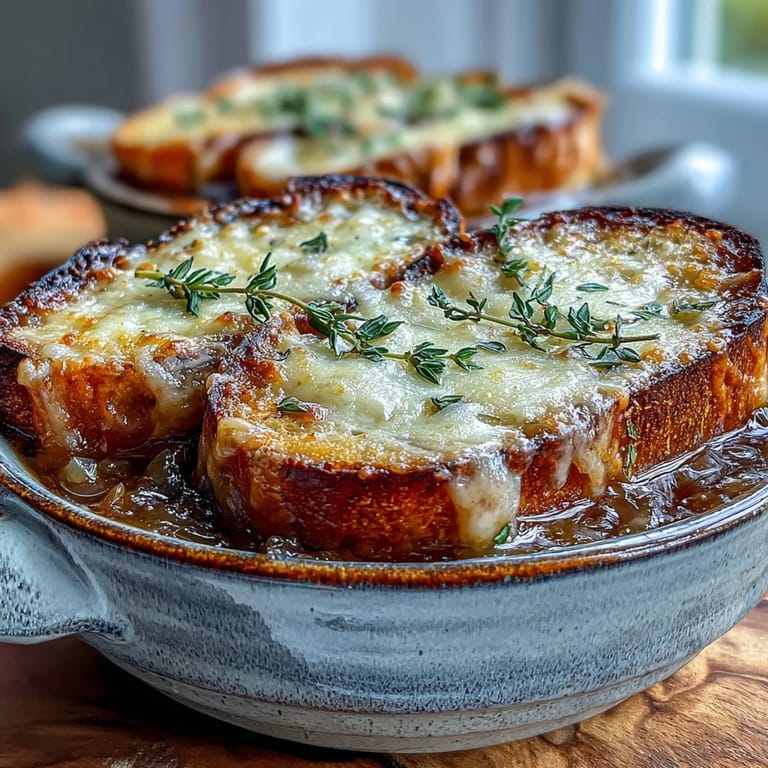
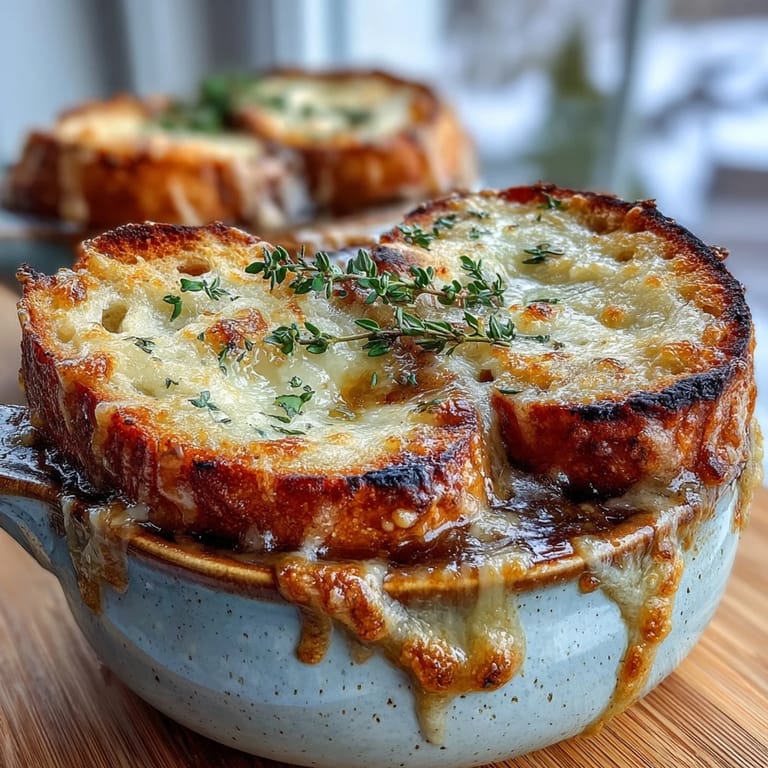
- Ladle hot soup into each bowl, top with a toasted baguette slice, then pile on the Gruyère generously.
- Broil until bubbly and golden:
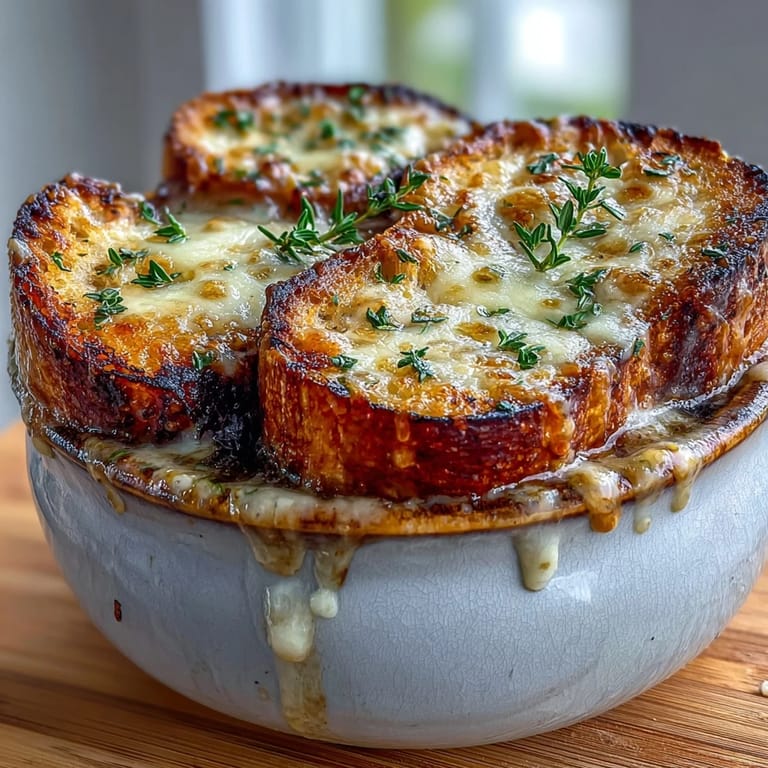
- A few minutes under the broiler and the cheese melts into crispy, molten perfection. Serve immediately while everything is still hot.
 Save
Save There was a moment last January when my teenage son came home upset about something at school, and instead of talking about it right away, we made this soup together. Somewhere between the slicing and the stirring and the smell filling the whole house, he opened up without me having to ask.
The Art of Caramelization
Caramelizing onions properly changed how I cook entirely, because I realized heat and time are as important as ingredients. The onions need to break down slowly, their sugars developing and browning in a way that can't be rushed or faked. Medium heat is your friend here—too hot and they'll burn on the outside while staying raw inside, too low and they'll just stew without developing that gorgeous color. I learned to trust the process, to not panic when they look pale after 10 minutes, because around minute 30 something shifts and they start turning glossy and amber. The smell is your guide as much as the clock.
Building Flavor Without Complications
This soup teaches you something important: simplicity done right beats complexity every single time. You're not adding cream or mushrooms or fancy garnishes—you're letting caramelized onions, good broth, a splash of wine, and a few herbs create something profound. The Worcestershire sauce and bay leaves do heavy lifting without announcing themselves, and the wine adds brightness that cuts through the richness of the cheese topping. Once you understand how these few elements work together, you realize you can apply the same thinking to other soups and dishes.
Serving and Pairing
French onion soup is meant to be a moment, not just a meal—serve it in beautiful bowls if you have them, and give yourself time to enjoy it properly. A crisp green salad on the side cuts through the richness, and if you want to get fancy, a glass of white Burgundy or even a simple Sauvignon Blanc plays beautifully with the sweetness of the onions. This isn't fast food; it's the kind of thing you eat slowly, letting the flavors change as it cools slightly and the bread softens into the broth.
- Make extra soup and freeze it without the baguette and cheese—it reheats beautifully and you can top it fresh.
- If your guests include vegetarians, vegetable broth and omitting the Worcestershire sauce creates something equally delicious.
- Gruyère is perfect, but Emmental or Swiss cheese work well if you need a substitute.
 Save
Save This soup reminded me that the best comfort food is the kind that takes time but not effort, that makes your kitchen smell like somewhere you want to stay. Once you've made it, you'll understand why it's been on menus for centuries.
Recipe FAQs
- → How long does it take to caramelize the onions properly?
The onions need 40-45 minutes of slow cooking over medium heat with frequent stirring. This patient process develops the deep, sweet flavor that makes this soup exceptional. Rushing this step will result in less flavorful results.
- → Can I make this vegetarian?
Yes, simply substitute vegetable broth for beef broth and omit the Worcestershire sauce or use a vegetarian version. The caramelized onions provide plenty of depth and umami flavor even without meat-based broth.
- → What cheese works best if I can't find Gruyère?
Swiss or Emmental cheese are excellent substitutes with similar melting properties and nutty flavor profiles. You can also mix in some Parmesan for added sharpness and complexity.
- → Do I need oven-safe bowls?
Yes, oven-safe bowls are essential for the final broiling step where the cheese melts and bubbles on top. If you don't have them, you can toast the cheese-topped bread separately and place it on the soup just before serving.
- → Can I prepare this ahead of time?
The soup base can be made up to 3 days ahead and refrigerated. When ready to serve, reheat the soup, then add the bread and cheese topping and broil. The caramelized onions actually deepen in flavor after a day or two.
- → Why add sugar to the onions?
The small amount of sugar helps jumpstart the caramelization process and enhances the natural sweetness of the onions. It's a classic technique that reduces the cooking time slightly while ensuring even browning.