 Save
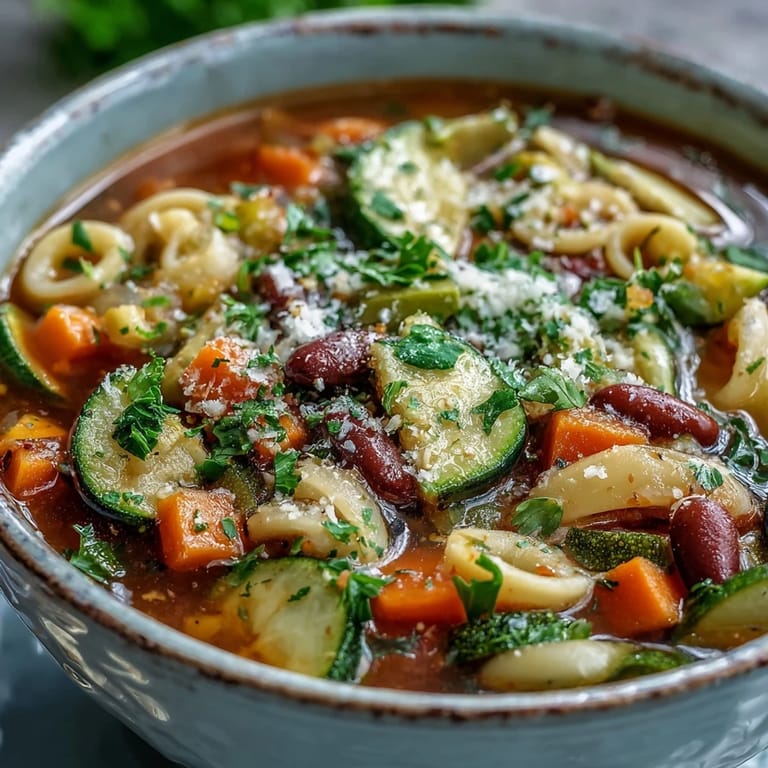
Save My neighbor Maria taught me that minestrone isn't really a recipe so much as a conversation with whatever vegetables are sitting in your crisper drawer. One rainy October afternoon, she showed up at my door with a canvas bag of late-season zucchini and green beans, insisting we make soup together while her grandchildren napped upstairs. Within an hour, my kitchen smelled like garlic and herbs, and I understood why this soup has survived centuries—it's honest food that adapts to you, not the other way around.
I made this for my dad the winter after his surgery, when he needed something gentle but substantial. He ate three bowls while sitting at my kitchen counter, and halfway through the second one, he stopped to tell me it tasted like the soup his mother used to make in Bologna. I'd never met her, but somehow the combination of tomato, beans, and herbs carried that memory forward anyway.
Ingredients
- Olive oil: Use a good quality oil here—it's one of the few ingredients that really shows itself in a simple broth like this, so don't reach for the bottom shelf bottle.
- Onion, carrots, and celery: This trio is the flavor foundation, and taking time to dice them evenly means they'll soften at the same pace.
- Garlic: Fresh is essential; the jarred stuff turns bitter when simmered this long.
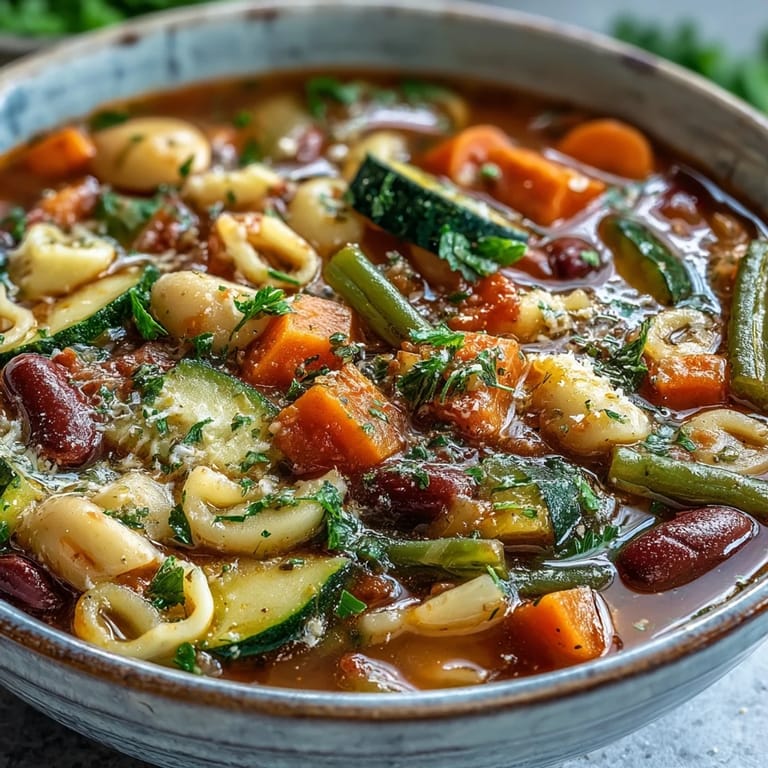
- Zucchini and green beans: These add color and sweetness that balances the tomato and herbs beautifully.
- Spinach or kale: It wilts down dramatically, so don't be scared of the handful you're adding.
- Canned diced tomatoes: San Marzano varieties have fewer seeds and less liquid, which gives you more control over the broth consistency.
- Vegetable broth: The quality here matters more than you'd think; I learned this the hard way after one batch tasted inexplicably flat.
- Oregano, basil, and thyme: Dried herbs are perfect for soups—they have time to unfold their flavors slowly into the broth.
- Cannellini and kidney beans: Rinsing them removes excess starch and prevents the soup from becoming murky.
- Small pasta: Ditalini or small shells work best because they don't disappear into the vegetables or take forever to cook.
Tired of Takeout? 🥡
Get 10 meals you can make faster than delivery arrives. Seriously.
One email. No spam. Unsubscribe anytime.
Instructions
- Build your flavor base:
- Heat olive oil in a large pot over medium heat, then add diced onion, carrots, and celery. Let them soften for 5 to 6 minutes, stirring occasionally—you'll know they're ready when the onion turns translucent and the kitchen starts smelling like a restaurant. This is the moment where the soup's foundation gets laid, so resist the urge to rush.
- Deepen with aromatics:
- Stir in minced garlic, diced zucchini, and chopped green beans. Cook for 3 to 4 minutes until the garlic becomes fragrant and loses that harsh raw edge. You should hear a gentle sizzle and smell something green and alive.
- Create the broth:
- Add diced tomatoes, vegetable broth, oregano, basil, thyme, bay leaf, salt, and pepper. Bring everything to a boil, then reduce the heat to a gentle simmer, cover the pot, and let it bubble quietly for 15 minutes. This step is where the flavors marry together into something that tastes like it's been cooking all day.
- Finish with pasta and beans:
- Stir in the small pasta and both drained cans of beans, then simmer uncovered for 10 to 12 minutes. Stir occasionally and watch for the moment when the pasta reaches that perfect al dente texture—it should have a slight resistance when you bite it, not mushy or chalky.
- Add the greens:
- Toss in spinach or kale and cook for just 2 to 3 minutes until it wilts completely. Remove the bay leaf, taste the broth, and adjust salt and pepper if needed—sometimes you'll need more than you'd expect.
 Save
Save My friend's daughter called this soup "magic vegetable soup" for months after I made it for their family dinner, and she ate three bowls of it without complaining about the kale hiding inside. That's when I realized minestrone's real gift isn't its simplicity or even its flexibility—it's the way it can make someone feel genuinely cared for.
When to Make This Soup
Minestrone works beautifully year-round, but it's especially rewarding in late summer and early fall when you're desperate to use up a glut of vegetables before they turn. Spring versions with fresh peas and tender green beans feel lighter, while winter batches loaded with root vegetables become almost stew-like. I keep dried herbs on hand specifically for this soup because making it doesn't require any special planning or advance notice.
Storage and Leftovers
This soup keeps beautifully in the refrigerator for up to four days in an airtight container, and it actually tastes better after sitting overnight because the flavors have more time to mingle and settle. You can also freeze it for up to three months, though I'd recommend storing the pasta separately if you're planning to freeze large batches—it tends to absorb more broth as it thaws. Reheating on the stovetop over medium heat rather than the microwave helps it taste fresher and gives you a chance to adjust the seasonings.
Variations and Swaps
The beauty of minestrone is that it genuinely welcomes improvisation without losing its identity. Potatoes, cabbage, or frozen peas make excellent additions depending on the season or whatever's in your pantry. For a vegan version, simply skip the Parmesan garnish or use a plant-based alternative, and for gluten-free eating, swap the pasta for a gluten-free shape that you know you like. One last thought—leftover soup becomes an excellent base for adding grains like rice or barley, so don't hesitate to reinvent it.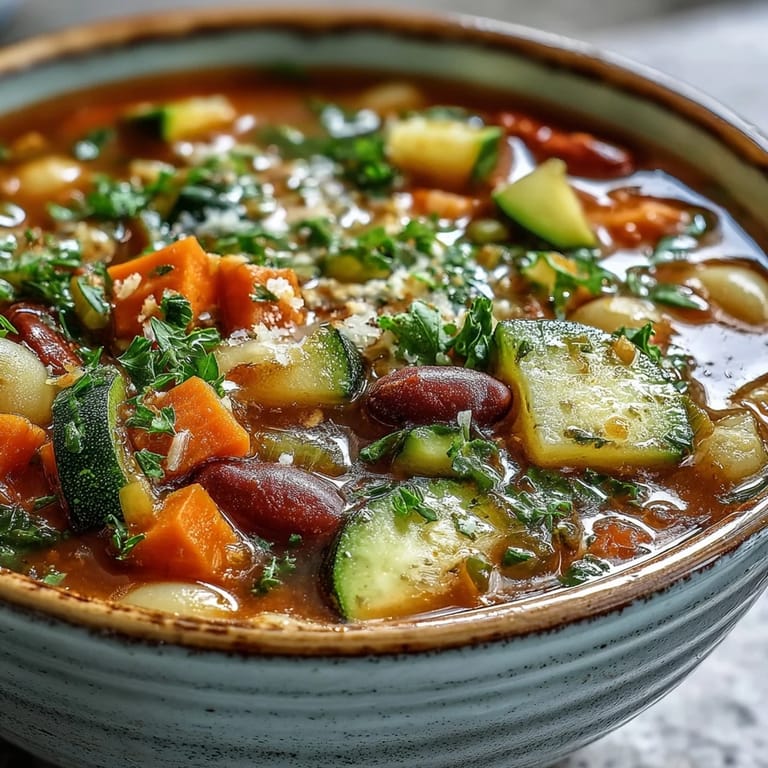 Save
Save
There's something deeply satisfying about serving a bowl of minestrone to someone you care about and watching them slow down mid-conversation to really taste it. That's when you know you've made something that matters.
Recipe FAQs
- → Can I use different vegetables in this minestrone?
Absolutely! Minestrone is highly adaptable. Try adding diced potatoes, cabbage, peas, or butternut squash. Use whatever seasonal vegetables you have on hand for the best flavor and freshness.
- → What type of pasta works best for minestrone?
Small pasta shapes like ditalini, elbow macaroni, or small shells work perfectly. They're easy to eat with a spoon and cook evenly in the broth. For gluten-free options, use your favorite gluten-free small pasta.
- → How do I make this soup vegan?
Simply omit the Parmesan cheese garnish or substitute with a plant-based cheese alternative. The soup itself is already vegetarian, so this small change makes it completely vegan-friendly.
- → Can I make minestrone ahead of time?
Yes! Minestrone tastes even better the next day as flavors meld together. Store in the refrigerator for up to 4 days. Note that pasta may absorb liquid, so add extra broth when reheating if needed.
- → What should I serve with minestrone soup?
Crusty Italian bread or garlic bread makes an excellent accompaniment for soaking up the flavorful broth. A simple green salad and a light red wine like Chianti complete the meal beautifully.
- → Can I freeze leftover minestrone?
You can freeze minestrone, but for best results, freeze it before adding the pasta. Pasta can become mushy when frozen and reheated. Add fresh pasta when reheating the thawed soup.