 Save
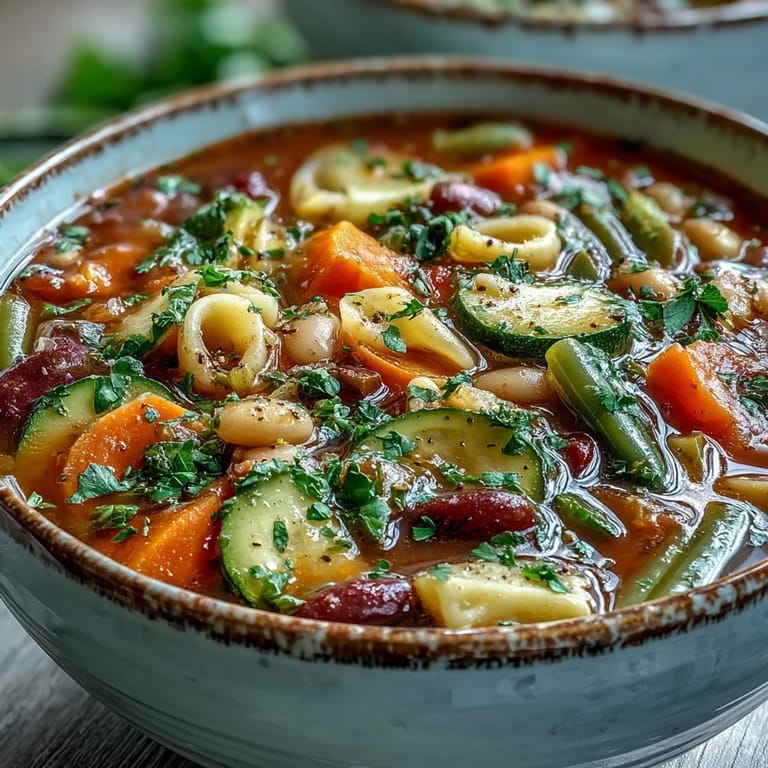
Save My neighbor Maria knocked on my door one October afternoon with a pot of minestrone still steaming from her stove, apologizing that it was just something she threw together. I took one spoonful and understood why her family gathered around that kitchen table every week during cooler months. There's a particular magic in how the vegetables soften into the broth, how the pasta picks up all that tomato flavor, how one bowl somehow tastes like both comfort and nourishment at once. This soup became my answer to those days when the kitchen feels chaotic but you want something genuinely good on the table.
I made this soup for my sister after her move, filling her new kitchen with that unmistakable minestrone aroma while we unpacked boxes. She sat at her still-bare kitchen table with a bowl cradled in both hands, and for the first time since the chaos of relocation began, she actually smiled. That's when I realized minestrone isn't just sustenance, it's a way of saying someone matters enough to slow down and cook for them properly.
Ingredients
- Olive oil: Use good quality if you can, since it carries the soup's foundation flavor, especially in the soffritto where the onion, celery, and carrot first meet heat.
- Onion, celery, and carrots: This holy trinity of vegetables builds the soup's personality, so dice them roughly equal sizes so they soften together rather than at different rates.
- Garlic: Minced fine releases its sharpness into the broth just as the softer vegetables finish cooking, adding a whisper rather than a shout.
- Zucchini: Choose firm ones and dice them small so they don't disintegrate by the time the soup is done, maintaining that delicate texture that contrasts with the beans.
- Green beans: Cut into 1-inch pieces so they soften enough to eat easily but keep a slight snap, contributing both color and a subtle earthiness.
- Baby spinach or kale: Add this at the very end so it wilts from the heat while keeping its nutritional integrity and a hint of its original texture.
- Diced tomatoes and tomato paste: The tomato paste concentrates flavor early on, while the canned tomatoes provide body and acidity that bright herbs cannot achieve alone.
- Vegetable broth: Quality matters here since it becomes the soup's actual backbone, so taste it before adding to ensure it's something you'd actually enjoy drinking.
- Cannellini or kidney beans: Drain and rinse them thoroughly to remove the canning liquid that can muddy the broth's clarity and make the soup feel heavier than it should be.
- Small pasta: Ditalini or elbow pasta absorbs the broth flavor without overwhelming the vegetables, and small shapes cook faster so you won't end up with mushy pieces by serving time.
- Dried oregano, basil, and thyme: These herbs dry well and hold their character through simmering, creating that distinctly Italian backbone that makes minestrone unmistakable.
- Bay leaf: It's a subtle anchor that you barely notice until it's missing, adding a faint leafy depth that rounds out the soup's personality.
- Fresh parsley: Stir it in at the end so it stays bright and grassy rather than cooking into anonymous flavor, then scatter more on top for that final gesture of care.
Tired of Takeout? 🥡
Get 10 meals you can make faster than delivery arrives. Seriously.
One email. No spam. Unsubscribe anytime.
Instructions
- Build the base:
- Heat olive oil in a large pot over medium heat and add your diced onion, celery, and carrots, letting them soften for about 5 minutes until the onion becomes translucent and the kitchen smells undeniably like something good is happening. You'll know you're ready for the next step when the vegetables are tender enough to break easily with a wooden spoon but still hold their shape.
- Deepen the flavors:
- Stir in the minced garlic, diced zucchini, and green beans, cooking for 3 to 4 minutes until the garlic releases its perfume and the vegetables begin to soften slightly. This is where the soup goes from smelling pleasant to smelling like someone who actually knows what they're doing is in the kitchen.
- Bring in the broth and herbs:
- Add your diced tomatoes, tomato paste, vegetable broth, oregano, basil, thyme, and bay leaf, stirring well to dissolve the tomato paste completely so it distributes evenly. Bring the whole pot to a boil, then reduce heat and let it simmer gently for 15 minutes, allowing the flavors to mingle and deepen without losing the vegetables' bright character.
- Add pasta and beans:
- Stir in the drained beans and small pasta, cooking for about 10 minutes until the pasta reaches that perfect al dente state where it still has a slight resistance but isn't hard. Taste the broth at this point, as the pasta will have released starch that thickens and slightly transforms the soup's texture.
- Finish with greens and herbs:
- Stir in the spinach or kale and fresh parsley, letting the soup simmer for just 2 to 3 minutes until the greens collapse into the broth and turn a darker, more muted shade of green. This brief final cooking keeps the greens from turning gray or bitter, preserving their nutritional value and subtle sweetness.
- Final adjustments and serving:
- Remove the bay leaf, then taste and season with salt and pepper to your preference, remembering that the soup will taste slightly different when served hot versus when you first taste it. Ladle into bowls, scatter fresh parsley across the top, and serve immediately with crusty bread for soaking up every last drop of broth.
 Save
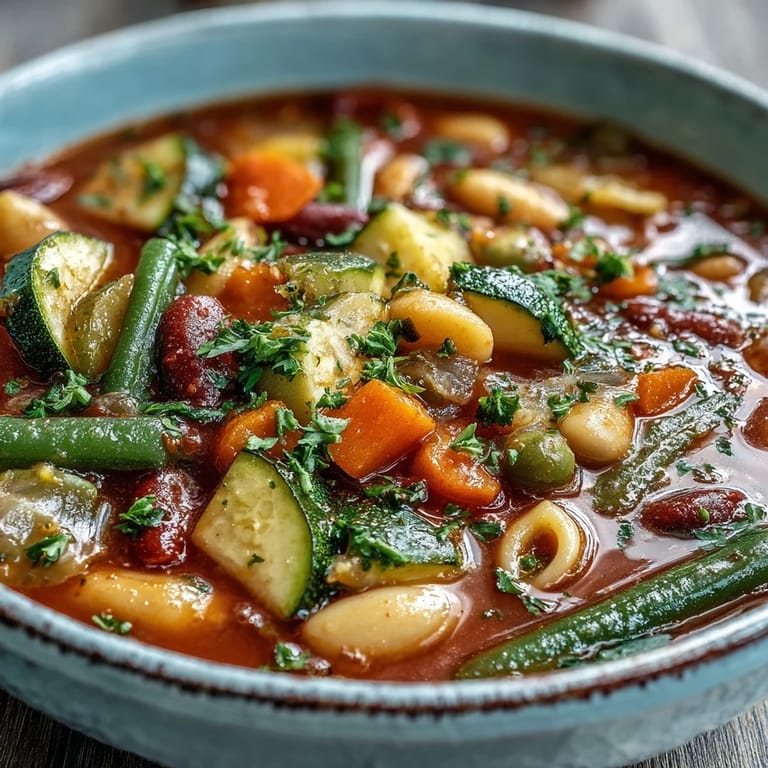
Save There's a specific moment when minestrone stops being ingredients in a pot and becomes soup, and it happens sometime during that final gentle simmer when the greens wilt and the pasta softens just right. That's when you know you've created something worth offering to someone you care about, something that says more than words ever could.
The Secret to Layers of Flavor
Most people expect minestrone to taste uniform throughout, but the real version builds flavor in stages that your palate actually notices. The soffritto gives you richness, the tomato paste adds depth, the broth provides body, the herbs bring earthiness, and the fresh parsley at the end opens everything back up again. When you taste it this way, each component remains distinct rather than blending into anonymous vegetable soup, and that's what separates memorable minestrone from the forgettable kind.
Seasonal Substitutions That Actually Work
The beauty of minestrone is that it was invented as a way to use whatever vegetables a garden or market had at that moment, so substituting seasonally isn't just allowed, it's encouraged. Summer versions might include zucchini, yellow squash, and fresh basil, while autumn versions embrace carrots, kale, and dried herbs, and both taste absolutely right for their time of year. The soup adapts to your life rather than demanding specific ingredients, which means you can make it year-round without ever making the same bowl twice.
Making It Your Own
Once you understand the structure of minestrone, you have permission to treat it like a template rather than a rulebook. Some people add red pepper flakes for heat, others include diced fennel for sweetness, and a few stir in cream at the very end for richness. The core technique remains constant, but your version can reflect exactly what sounds good to you on any given day.
- If you prefer a brothier soup, use more vegetable stock and less pasta, letting the vegetables and legumes float in abundance rather than competing for space.
- Top with crusty bread rubbed with garlic and drizzled with good olive oil, or add a generous handful of grated Parmesan if your diet allows it.
- Make a double batch and freeze half in individual portions, knowing that minestrone actually tastes better on the second or third day when flavors have fully settled and gotten to know each other.
 Save
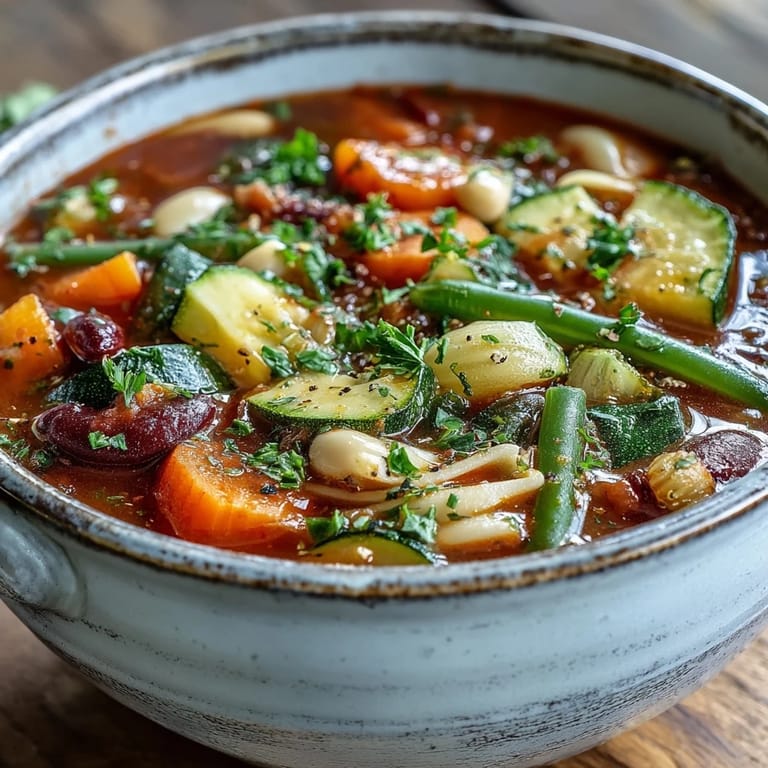
Save Minestrone is one of those rare dishes that tastes like home no matter whose kitchen you're in, and that's because it's made with intention rather than ingredients. Make it tonight, and tomorrow you'll understand why my neighbor was unapologetic about that pot at my door.
Recipe FAQs
- → Can I use different vegetables in this soup?
Yes, minestrone is very versatile. You can substitute seasonal vegetables like bell peppers, potatoes, cabbage, or peas. Just maintain similar cooking times for best results.
- → What type of pasta works best?
Small pasta shapes like ditalini, elbow macaroni, or small shells work perfectly. They cook evenly and are easy to eat with a spoon. For gluten-free options, use certified gluten-free pasta.
- → Can I make this soup ahead of time?
Absolutely. This soup stores well in the refrigerator for up to 4 days. Note that the pasta will absorb liquid over time, so you may need to add extra broth when reheating.
- → How can I make this soup vegan?
The soup is already vegetarian. To make it vegan, simply omit the Parmesan cheese topping or use a plant-based cheese alternative. Ensure your vegetable broth is also vegan.
- → Can this soup be frozen?
Yes, but it's best to freeze it before adding the pasta, as pasta can become mushy when frozen and reheated. Cook the pasta fresh when you're ready to serve the thawed soup.
- → What can I serve with minestrone?
Crusty Italian bread, garlic bread, or focaccia are traditional accompaniments. A simple green salad with vinaigrette also pairs beautifully with this hearty soup.