 Save
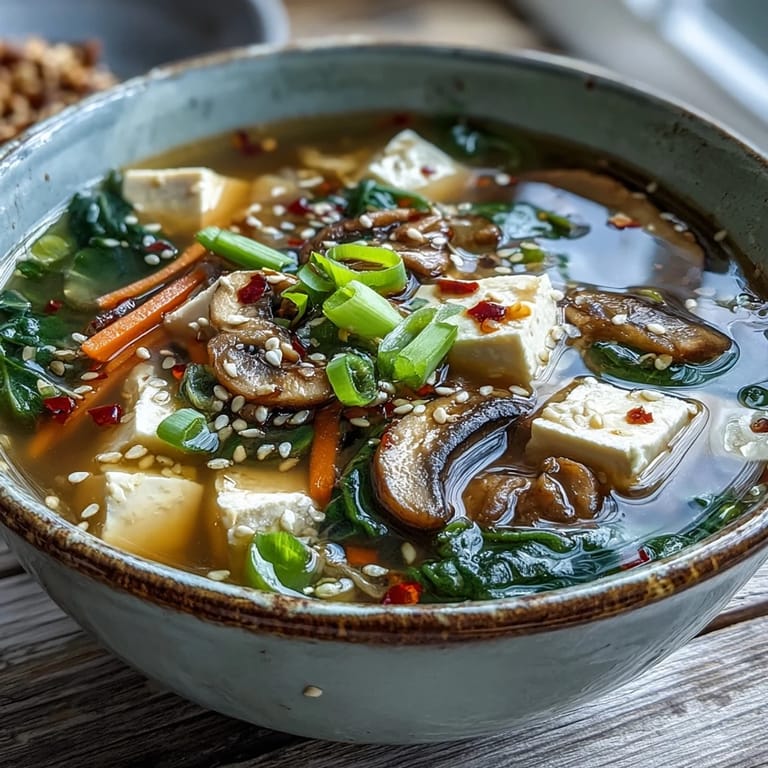
Save There's something about standing over a steaming pot of ginger-miso soup on a gray afternoon that feels like a small act of self-care. My kitchen filled with the sharp, warming scent of fresh ginger, and I realized this wasn't just soup—it was exactly what I needed when the weather turned cold and my energy dipped. The simplicity of it surprised me: just a few vegetables, a swirl of miso, and suddenly I had something that tasted like comfort but felt nourishing enough to actually believe in.
I made this for a friend who showed up unannounced on a snow day, and she sat at my counter watching the whole thing happen—slicing ginger, adding vegetables, waiting for that moment when the miso went in. She asked why I wasn't boiling it after adding the miso, and I got to explain about the probiotics, about how this soup is as much about what stays alive in it as what goes into it. By the time we sat down with bowls, the kitchen had gotten so warm and fragrant that it felt like the soup had already done half its job.
Ingredients
- Water or low-sodium vegetable broth (6 cups): This is your foundation, and using broth instead of water adds a subtle depth that makes everything taste more intentional—I learned this the hard way after making it with plain water once.
- Fresh ginger (2-inch piece), thinly sliced: Don't peel it; the skin holds flavor and texture, and thin slicing means it releases its heat into the broth without overwhelming it.
- Garlic cloves (2), thinly sliced: Slice them the same thickness as the ginger so they cook evenly and won't leave you biting into a chunk of raw garlic later.
- White or yellow miso paste (2 tablespoons): This is where the magic lives—miso is umami in paste form, and the gentle fermentation gives the soup a complexity that feels almost mysterious.
- Napa cabbage (1 cup), thinly sliced: It wilts beautifully and adds a subtle sweetness that balances the sharpness of the ginger.
- Carrot (1 medium), julienned: Thin slicing means it softens in minutes and contributes a natural sweetness that rounds out the broth.
- Shiitake mushrooms (1 cup), stemmed and sliced: They're earthy and meaty, adding another layer of umami that works in conversation with the miso.
- Scallions (2), sliced: Save these for garnish so they stay bright and slightly sharp rather than turning soft in the heat.
- Toasted sesame seeds (1 tablespoon): Toasting them yourself if you can—it takes two minutes in a dry pan and completely changes the flavor profile.
- Fresh cilantro or parsley (1 tablespoon), chopped: Optional but recommended; the freshness cuts through the richness beautifully.
- Chili oil or chili flakes (1 teaspoon): A optional finishing touch that adds heat and visual appeal without overwhelming the delicate broth.
- Silken tofu (200 g), cubed: Optional, but if you add it, it creates a creamy texture and adds protein in a way that feels like part of the soup rather than an afterthought.
- Soba or rice noodles (100 g), cooked: Optional; use these if you want the soup to be more substantial, but the broth stands perfectly well on its own.
Tired of Takeout? 🥡
Get 10 meals you can make faster than delivery arrives. Seriously.
One email. No spam. Unsubscribe anytime.
Instructions
- Bring your broth to a gentle simmer:
- Pour water or broth into a large pot and let it heat slowly—this isn't a race, and a gentle heat means your flavors will develop more evenly. You'll know it's ready when small bubbles appear at the bottom and the surface barely shivers.
- Infuse with ginger and garlic:
- Add the sliced ginger and garlic and let them hang out for about 10 minutes, releasing all their warmth and character into the broth. Your kitchen will smell incredible, which is partly the point.
- Add the vegetables:
- Drop in the napa cabbage, carrot, and shiitake mushrooms and simmer for 5 to 7 minutes until they're tender but still have a little presence. You want them soft enough to enjoy but not so cooked that they disappear.
- Prepare and add the miso:
- Remove the pot from heat, scoop a ladle of hot broth into a small bowl, and whisk the miso paste into it until it's completely smooth—this prevents lumps in your final soup. Stir this mixture back into the pot gently, making sure not to boil the soup after this point, which keeps the beneficial probiotics alive.
- Warm through any add-ins:
- If you're using tofu or noodles, add them now and let them warm through for about 2 minutes. They just need to be brought up to temperature, not cooked further.
- Ladle and serve:
- Pour the soup into bowls and finish with scallions, sesame seeds, herbs, and a drizzle of chili oil if you're feeling it. Serve immediately while everything is still hot and the flavors are at their brightest.
 Save
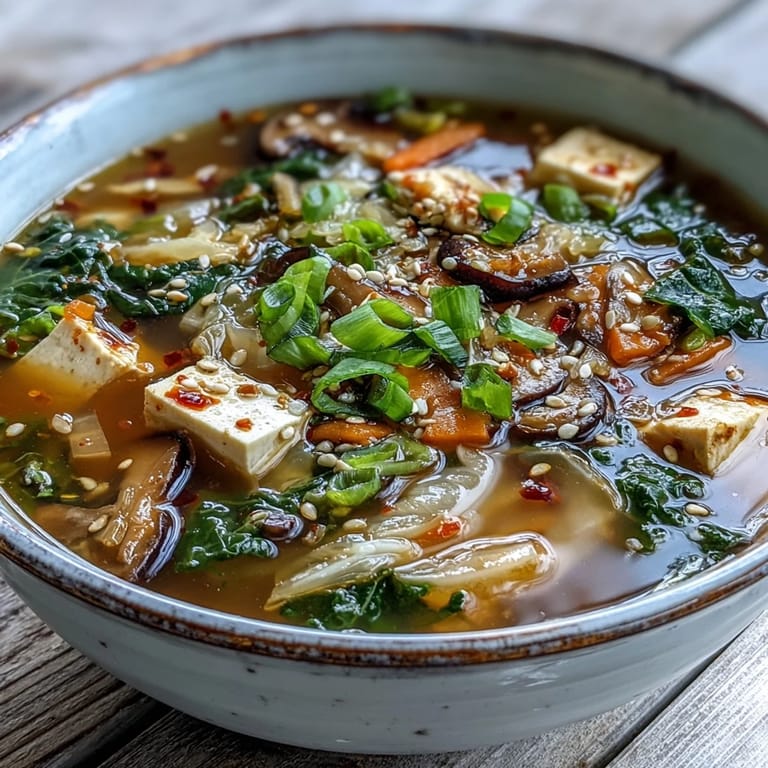
Save There was a moment, late one evening when I was feeling under the weather, that I made this soup and sat with it for what felt like the whole hour, just slowly eating spoonful after spoonful. It wasn't about the ingredients—it was about the act of making something that was simultaneously comforting and genuinely good for me. That's when I understood that this soup isn't just food; it's a small ritual that reminds you that you're worth taking care of.
Why This Soup Works in Winter
Winter soups need to do two things: warm you from the outside in, and nourish you in a way that feels genuine rather than heavy. This soup handles both with grace, largely because of how the ginger creates an internal warming sensation while the vegetables add fiber and the miso adds depth without bulk. There's no cream, no heavy base, just honest ingredients that taste like they belong together because they actually do.
Variations and Improvisation
The beauty of this soup is that it's forgiving enough to swap and adjust based on what you have or what you're craving. Some days I use bok choy instead of napa cabbage, other times I add spinach at the very end so it stays bright and slightly textured. I've also experimented with different mushroom varieties—button mushrooms work beautifully, as do enoki if you want something more delicate—and the soup adapts without losing its character.
Serving and Pairing Suggestions
This soup is lovely on its own, but it also plays well with others if you want to round out a meal. A crisp, dry white wine pairs unexpectedly well if you're having this with something more substantial, though honestly, a cup of green tea alongside feels more natural and harmonious. The key is not to overwhelm the delicate balance of the broth, so keep side dishes light and let the soup be the star.
- Serve the soup immediately after assembly so the vegetables stay tender and the flavors are at their peak brightness.
- If you're making this ahead, store the broth separately from the vegetables and assemble just before serving to maintain texture and freshness.
- This soup reheats beautifully, but add the miso fresh each time rather than storing the finished soup, which keeps the probiotics intact.
 Save
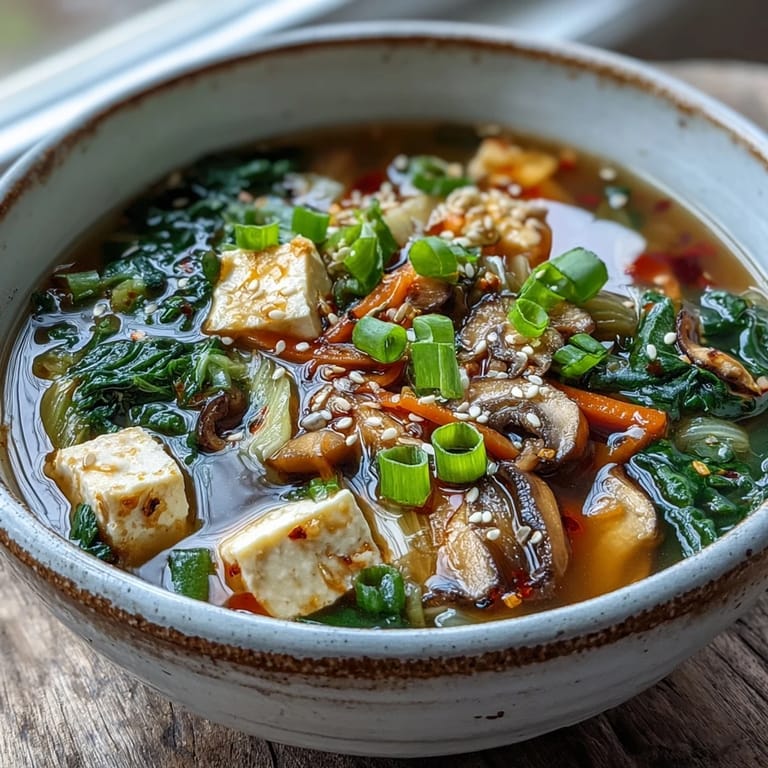
Save This soup has become my go-to answer when someone asks what I'm eating on a cold day, because it delivers exactly what it promises: warmth, nourishment, and the kind of comfort that doesn't leave you feeling guilty afterward. Make it once and you'll understand why.
Recipe FAQs
- → Why shouldn't I boil miso?
Boiling miso paste destroys its beneficial probiotics and can make the flavor bitter. Always dissolve miso in warm liquid off the heat to preserve its health benefits and delicate taste.
- → Can I make this soup gluten-free?
Yes. Use certified gluten-free miso and tamari instead of soy sauce. Choose rice noodles or skip the noodles entirely to keep this bowl completely gluten-free.
- → How long does this soup keep?
Store cooled soup in an airtight container for up to 3 days. Reheat gently without boiling to preserve the miso's probiotics. Add fresh garnishes before serving.
- → What vegetables work best?
Napa cabbage, shiitakes, and carrots provide excellent texture. You can also add bok choy, spinach, daikon radish, or tofu for extra protein and variety.
- → Can I freeze ginger miso soup?
Freezing affects miso's texture and probiotic benefits. For best results, freeze the vegetable broth base without miso. Add fresh miso when reheating for optimal flavor and nutrition.
- → How do I adjust the seasoning?
Taste before adding miso since brands vary in saltiness. Start with less miso and gradually increase. Add soy sauce, tamari, or extra ginger to fine-tune the umami balance.