 Save
Save The smell of a dark roux bubbling on the stove instantly transports me to my grandmother's kitchen in New Orleans, where she'd stand guard over the pot like it held the family's deepest secrets. She taught me that patience isn't just a virtue in gumbo-making—it's the difference between a good stew and one that makes people close their eyes and sigh. I've burned more roux than I care to admit, usually because I got distracted by a phone call or someone at the door, but those mistakes taught me to respect the process. Now I clear my schedule and treat those 20 minutes of stirring as a meditation, watching the flour transform from pale yellow to peanut butter brown to that perfect mahogany that smells like toasted nuts and possibility.
Last winter I made this gumbo during a snowstorm that trapped my friends at my house for three days straight. We ate bowls of it huddled under blankets while watching bad movies, and something about that rich, warming broth made the house feel cozy instead of stir-crazy. One friend who swore she hated anything with fil powder asked for thirds, then spent the next week texting me about how she was dreaming about that 'magical green stuff.' Now it's become our snow day tradition, and I keep a jar of fil powder in the pantry just in case the forecast turns threatening.
Ingredients
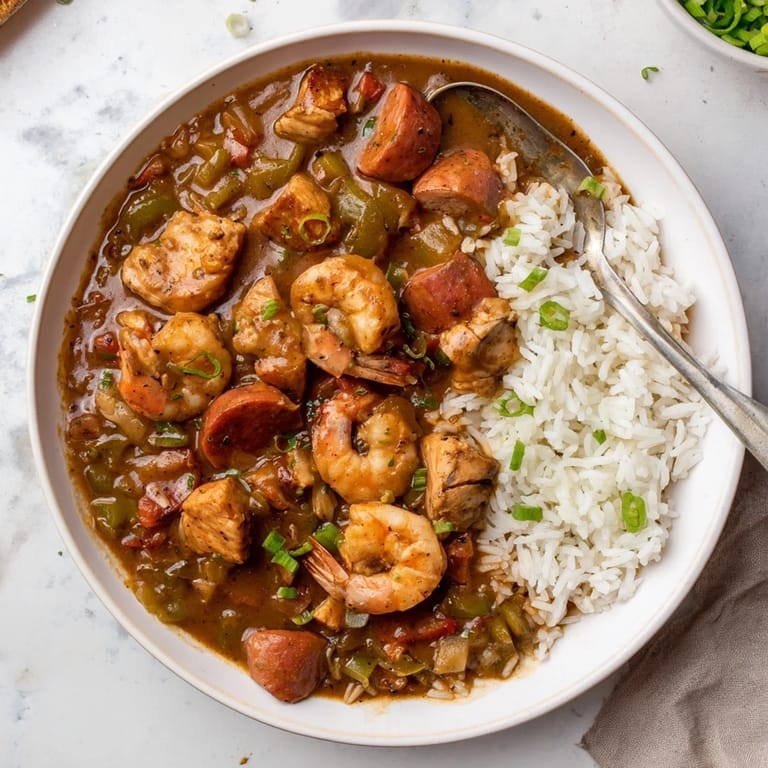
- Andouille sausage: This smoked pork sausage brings the essential Cajun backbone of heat and smoke that defines authentic gumbo flavor
- Chicken thighs: Dark meat stays tender during long simmering and contributes richness to the broth
- Shrimp: Added at the very end to prevent rubbery texture, they bring sweet seafood notes that balance the heavy spices
- The holy trinity: Onion, bell pepper, and celery form the aromatic foundation of Creole cooking, softened in the roux to build layered flavor
- Vegetable oil and flour: Combined into a dark roux, this simple mixture creates the thickening agent and deep nutty flavor that defines gumbo
- Chicken or seafood stock: Use high quality stock here because it forms the base of your broth, and watered down versions will leave your gumbo tasting thin
- Bay leaves and dried thyme: These classic herbs provide earthy background notes that meld with the other spices during long cooking
- Smoked paprika and cayenne: Smoked paprika adds another layer of smoke while cayenne brings the adjustable heat
- Worcestershire sauce: This umami bomb deepens the savory complexity and adds that certain something people cant quite identify
- Fil powder: Ground sassafras leaves added at the end for traditional thickening and a subtle herbal flavor, but use sparingly as it can become stringy if overcooked
Tired of Takeout? 🥡
Get 10 meals you can make faster than delivery arrives. Seriously.
One email. No spam. Unsubscribe anytime.
Instructions
- Mise en place everything:
- Measure and chop all ingredients before you start because once that roux begins cooking, you wont have hands free to prep anything else
- Make the dark roux:
- Heat oil in your heavy pot over medium heat, whisk in flour gradually, and stir constantly for 15 to 20 minutes until it reaches deep chocolate brown color
- Add the holy trinity:
- Throw in onion, bell pepper, and celery, cooking about 5 minutes until softened and fragrant
- Bloom the garlic:
- Stir in minced garlic for just 1 minute until fragrant, being careful not to burn it
- Brown the proteins:
- Add sausage and chicken chunks, sauting 5 minutes until lightly browned on the outside
- Build the spice base:
- Stir in tomatoes, bay leaves, thyme, paprika, cayenne, salt, and black pepper until everything is well coated
- Create the broth:
- Gradually pour in stock while stirring, bring to boil, then reduce to low and simmer uncovered 45 minutes
- Add seafood:
- If using shrimp, add during final 10 minutes of simmering and cook just until pink and opaque
- Finish with seasonings:
- Stir in Worcestershire sauce and hot sauce, taste and adjust salt as needed
- Optional fil powder:
- Remove from heat and stir in half to one teaspoon fil powder for thickening and flavor if desired
- Serve it up:
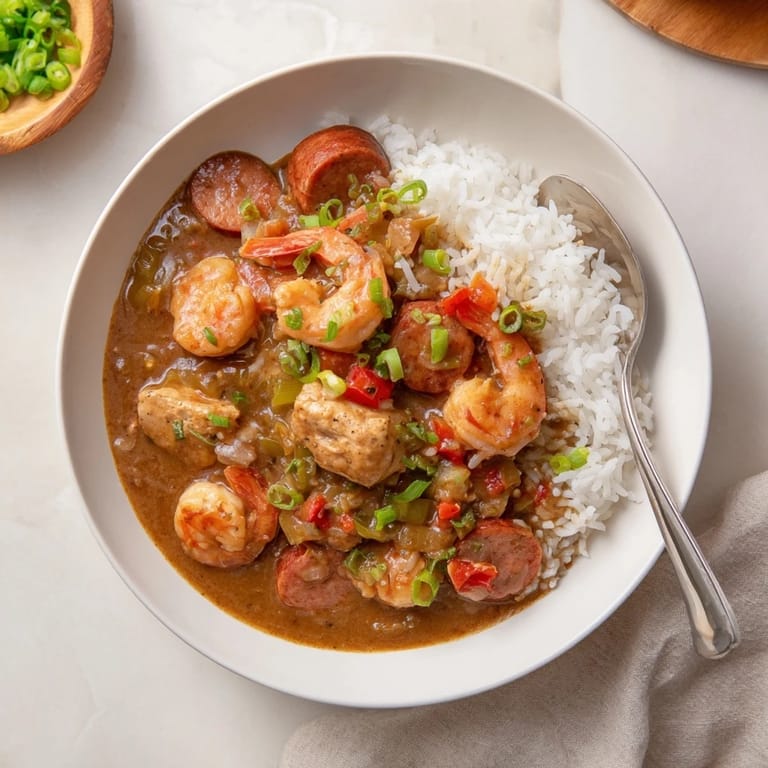
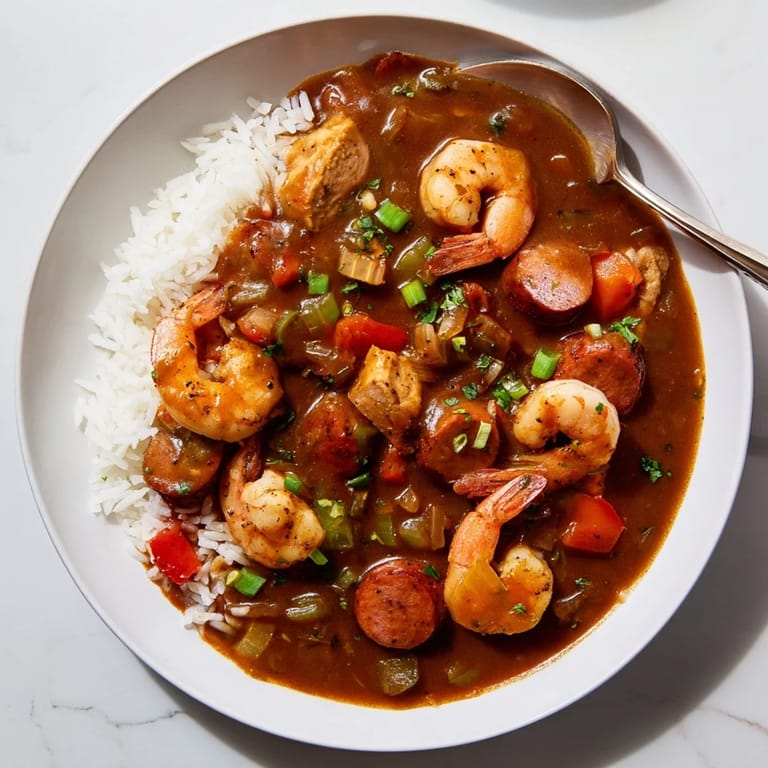
- Ladle hot gumbo over mounds of white rice and garnish with scallions and fresh parsley
 Save
Save This gumbo has become my go-to for bringing people together, whether it's a Mardi Gras party or just a Tuesday night when someone needs comfort. There's something about the ritual of serving it over rice, watching everyone customize their bowls with hot sauce and fil powder, that turns dinner into an event. I've learned that the best gumbo isn't made with precise measurements but with intuition—tasting, adjusting, and cooking until it tastes like home.
Mastering the Roux
The roux is everything in gumbo, and I've learned through plenty of burnt batches that you can't rush it or walk away. I keep a separate bowl of the flour-oil mixture measured out before I start, so if I burn my roux, I can quickly dump it and start fresh without panic. The color stages go from pale to peanut butter to milk chocolate to that perfect dark mahogany, and each stage brings different flavors and thickening power. Your roux should smell nutty and rich, never acrid or bitter.
Protein Strategy
While this recipe includes both sausage and chicken plus optional shrimp, you can easily adapt it based on what you have or your preferences. I've made entirely seafood versions with crab, oysters and fish that were absolutely luxurious, and vegetarian versions using mushrooms and okra that still satisfied the gumbo craving. The key is adjusting your cooking times so delicate proteins like shrimp don't overcook while heartier ones have time to develop flavor.
Serving and Storing
Gumbo is one of those rare dishes that genuinely improves after a night in the refrigerator, as the flavors continue to meld and the roux continues to thicken. I always make a double batch because leftovers freeze beautifully for up to three months and taste like pure comfort on busy weeknights. When reheating, you might need to add a splash of water or stock since it continues to thicken in the fridge.
- Set up a garnish station with hot sauce, extra fil powder, and maybe some hot crusty French bread for sopping up that rich broth
- Cold beer is traditional but a crisp white wine like Sauvignon Blanc cuts through the richness beautifully
- If you're making gumbo for a crowd, consider setting up a rice cooker so guests can serve themselves and control their rice to gumbo ratio
 Save
Save Whether you're celebrating Mardi Gras or just need a bowl of something that feels like a warm hug, this gumbo delivers every single time.
Recipe FAQs
- → What makes a authentic gumbo?
A genuine gumbo starts with a dark roux cooked until chocolate brown, which provides the foundation of flavor and thickness. The holy trinity of onion, bell pepper, and celery is essential, along with andouille sausage for smokiness. The dish should be thick enough to coat a spoon but not overly heavy, with layers of flavor from the long simmering process.
- → How dark should the roux be?
The roux needs to reach a deep chocolate brown color, which takes 15-20 minutes of constant stirring. This dark color develops a nutty, rich flavor that's essential to authentic gumbo. Be careful not to burn it, as burnt flour will taste bitter. The process requires patience and attention.
- → Can I make gumbo ahead of time?
Absolutely. Gumbo actually tastes better the next day as the flavors have more time to meld. Store it in the refrigerator for up to 3 days. Reheat gently on the stovetop, adding a splash of stock or water if it has thickened too much. Wait to add the shrimp until reheating if making ahead.
- → What's the difference between Cajun and Creole gumbo?
Cajun gumbo typically uses a darker roux and often contains more game meats, while Creole gumbo usually has a lighter roux and includes tomatoes. This version bridges both traditions with a dark roux and tomatoes. Both styles share the holy trinity of vegetables and the essential filé powder for thickening.
- → Is filé powder necessary?
Filé powder isn't strictly necessary but adds traditional flavor and acts as a natural thickener. Made from ground sassafras leaves, it provides a subtle earthy taste. Add it at the very end off the heat, as boiling can make the gumbo stringy. If unavailable, you can simply simmer the gumbo longer to reduce.
- → Can I freeze gumbo?
Yes, gumbo freezes beautifully for up to 3 months. Cool completely before transferring to freezer-safe containers. Leave out the shrimp if freezing, as seafood can become tough when frozen and reheated. Thaw overnight in the refrigerator and reheat gently on the stovetop, adding fresh shrimp during the final minutes.