 Save
Save One Tuesday evening, I found myself staring at a jar of sauerkraut in my fridge, wondering if it could become something warm and welcoming instead of the cold side dish I'd always known. My grandmother had mentioned once that apples and sauerkraut belonged together, a pairing that felt almost scandalous in its simplicity. That night, I tossed both into a skillet with some oil and honey, and suddenly the kitchen smelled like a German farmhouse in autumn. The combination of tangy fermented cabbage and caramelized apple sweetness felt like discovering something that had always been there, just waiting.
I remember serving this to friends who had just moved into their first apartment without a proper oven. We were sitting cross-legged on their kitchen floor, eating straight from the skillet with forks, and someone said, "Wait, this is actually sophisticated," which made us all laugh. That moment stuck with me because it proved the best meals aren't always the complicated ones—sometimes they're just honest food that tastes like someone cares.
Ingredients
- Medium apples (Honeycrisp or Gala): These varieties hold their shape while caramelizing, giving you pockets of sweetness that balance the fermented edge; Granny Smith works too if you want extra tartness that keeps everything from feeling cloying.
- Fresh sauerkraut, drained: The live cultures here are the real MVPs for digestion, and draining it prevents the skillet from becoming a watery mess.
- Red onion: Slicing it thin lets it soften into almost translucent ribbons that add color and a subtle sweetness that rounds out the tanginess.
- Olive oil: Just two tablespoons is enough to help everything develop flavor without making the dish feel heavy.
- Apple cider vinegar: A tablespoon deepens the sauerkraut's natural funk and adds complexity that plain vinegar never quite achieves.
- Honey or maple syrup: This isn't about making it dessert—it's about softening the fermented bite so every element feels cohesive.
- Caraway seeds: Optional but honestly transformative; they whisper of European kitchens and make this feel like something your ancestors knew instinctively.
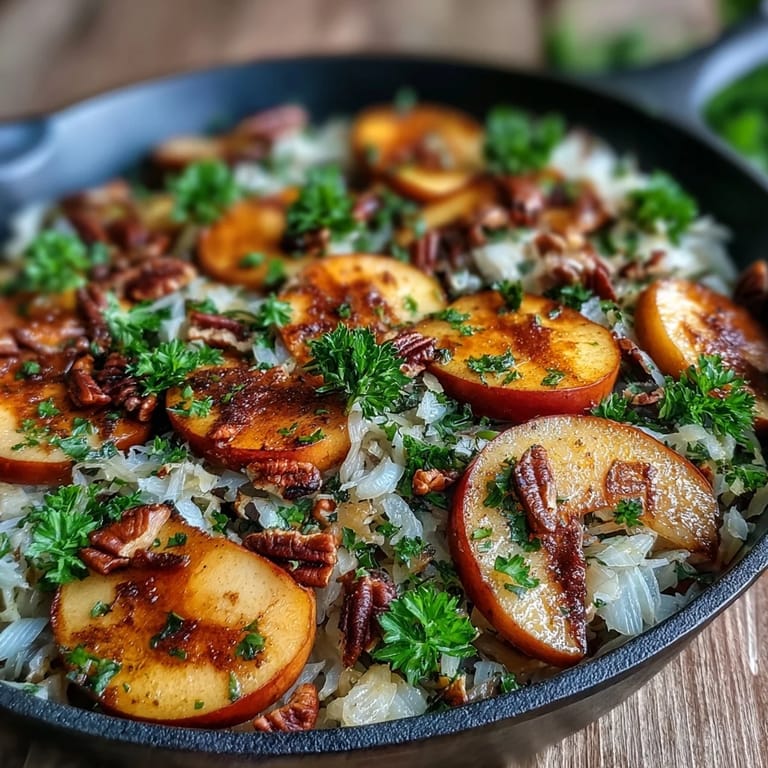
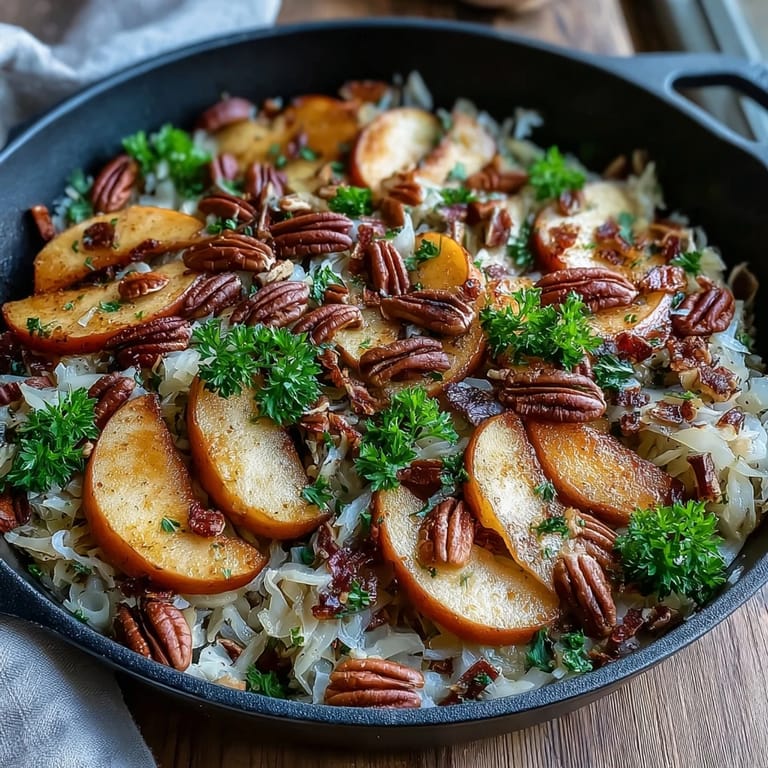
- Chopped fresh parsley and toasted nuts: These final touches add texture and brightness, turning something humble into something you'd actually plate up for guests.
Tired of Takeout? 🥡
Get 10 meals you can make faster than delivery arrives. Seriously.
One email. No spam. Unsubscribe anytime.
Instructions
- Get your skillet singing:
- Warm the olive oil over medium heat until it shimmers slightly and smells buttery. This is the foundation for everything that comes next.
- Caramelize the apples and onion:
- Add your sliced apples and red onion, stirring occasionally for 5 to 6 minutes until the apples turn golden at the edges and the onion becomes soft and almost translucent. You'll know it's right when your kitchen smells like autumn.
- Wake up the caraway:
- Stir in those caraway seeds (if using) and let them toast for just a minute—this releases their essential oils and makes the whole dish smell like a proper German kitchen.
- Bring in the sauerkraut:
- Add the drained sauerkraut along with apple cider vinegar, honey, and black pepper, then toss everything gently so nothing gets crushed. Cook for 2 to 3 minutes until the sauerkraut is just warmed through and the flavors start talking to each other.
- Taste and adjust:
- Pinch a little into your mouth—the salt might be perfect from the sauerkraut alone, or you might want to add a touch more depending on your brand. Trust your palate here.
- Finish and serve:
- Transfer to a serving bowl or platter, then crown it with fresh parsley and those toasted nuts if you're using them. Serve while still warm so every texture stays crisp and alive.
 Save
Save My neighbor's son, who lives on chicken nuggets and fruit snacks, actually asked for seconds of this, which felt like winning the lottery. It made me realize that sometimes food surprises us not because it's fancy, but because it's honest and asks us to try something without judgment.
When to Serve This Warm Skillet
This works as a confident side alongside grilled sausages or smoked tofu, or you can make it the main event by adding some kielbasa or cooked beans. It also sits beautifully next to roasted potatoes or a thick slice of rye bread, letting each element do its own thing while supporting the others. Winter feels like the natural home for this dish, but I've made it in summer too with just-picked apples, and it somehow tastes like someone understood exactly what you needed.
Making It Your Own
The beauty here is that you can play around without breaking anything. A handful of fresh dill instead of parsley gives it a different personality, or you could swap the walnuts for sunflower seeds if you need to dodge tree nuts. Some people add a pinch of mustard seeds, others drizzle with a touch of hazelnut oil at the end—there's no wrong move as long as you're respecting the fundamental balance between the sauerkraut's fermented edge and the apples' gentle sweetness.
Storage and Make-Ahead Wisdom
This is one of those rare dishes that actually tastes better the next day once everything has gotten cozy together, though the apples will soften and the nuts will lose their crunch. You can make it through step four the night before, then warm it gently before finishing with the fresh parsley and nuts right before serving. It keeps well in the refrigerator for up to three days, which means you can always have something nourishing ready when the week gets away from you.
- Store in an airtight container and reheat gently in a skillet rather than the microwave to keep textures from turning mushy.
- The sauerkraut's probiotic benefits stay intact in the fridge, so you're still getting all that gut-friendly goodness even on day three.
- If you're doubling this for company, everything scales beautifully—just add a couple extra minutes to the sautéing time so you're not crowding the pan.
 Save
Save This warm skillet reminds me that the best recipes are often the simple ones that respect their ingredients and don't apologize for their particular flavor story. Make it once and it becomes the kind of dish you reach for when you want something that tastes like care.
Recipe FAQs
- → Can I make this ahead of time?
Yes, you can prepare the components in advance. Sauté the apples and onions, then store separately from the sauerkraut. Reheat gently in a skillet before serving, adding the fresh garnishes just before plating for the best texture and presentation.
- → What type of apples work best?
Honeycrisp or Gala apples provide excellent sweetness that balances the tangy sauerkraut. For extra tartness, Granny Smith apples work beautifully. The key is choosing apples that hold their shape slightly during cooking while becoming tender and golden.
- → Is this dish suitable for meal prep?
Absolutely. The skillet reheats well and maintains its flavor for 2-3 days when stored in an airtight container in the refrigerator. Add the fresh parsley and toasted nuts just before serving to preserve their texture and vibrant appearance.
- → Can I add protein to make it a complete meal?
Certainly. Smoked tofu, cooked kielbasa, or grilled bratwurst complement the flavors perfectly. Simply add your chosen protein during the last few minutes of cooking to warm through, or serve alongside for a hearty main dish that's still ready in under 30 minutes.
- → What if I don't like caraway seeds?
Caraway seeds are optional and can be omitted entirely. For alternative flavor profiles, try fennel seeds for a similar aromatic quality, or add fresh thyme or rosemary during the apple sauté for an herby variation that still complements the German-inspired ingredients.