 Save
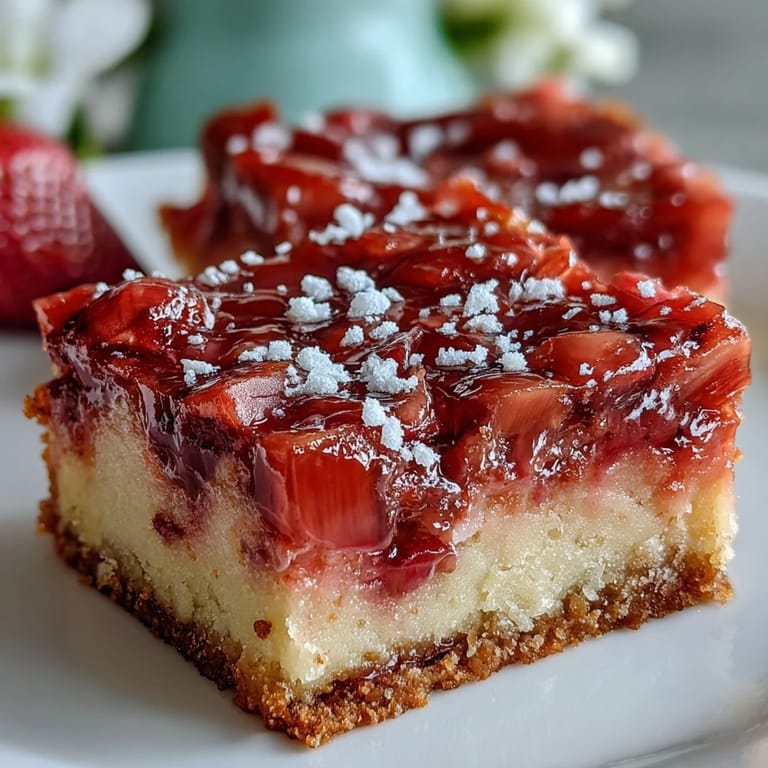
Save Some recipes have a way of teasing you from the very start—like the afternoon a friend dropped off a bundle of rhubarb at my doorstep, still cool from her garden. I hadn’t planned to bake that day, but those glossy stalks nudged me to experiment. By evening, my kitchen felt bright and cheery, scented with caramelized sugar, tart fruit, and a whisper of vanilla. There’s nothing quite like the gentle hissing sound when you pour custard over warm shortbread and sweet-sour rhubarb. The result: these custardy rhubarb bars that quickly became a springtime ritual.
The first tray I made wasn’t for a special event—just a regular Tuesday with my neighbor popping by for coffee. Before I knew it, we’d nibbled through half the pan, arguing over which bite had the best balance of sharp fruit and buttery shortbread. Something about licking the powdered sugar off our fingers as we chatted made baking feel easy and joyful. Even the dog waited under the table for crumbs. Now, these bars always remind me how the simplest occasions can be the most memorable.
Ingredients
- Unsalted butter (1 cup): Softened butter is the foundation of crumbly, rich shortbread—the chillier the room, the longer you need to beat for fluffiness.
- Granulated sugar (1/2 cup for crust, 1/2 cup for rhubarb, 1 cup for custard): Divided between layers, sugar balances tartness and melts into the custard for a smooth finish.
- All-purpose flour (2 cups for crust, 1/2 cup for custard): Measure with a gentle hand and don’t overmix—the secret to tenderness is barely bringing the dough together.
- Salt (1/4 tsp for crust, pinch for custard): Just enough to amplify the other flavors; too much risks overpowering the delicacy of the bars.
- Rhubarb (3 cups, chopped): Fresh is ideal for the right degree of tang; fibrous ends should be trimmed off before chopping.
- Eggs (3 large): These give the custard structure, so let them come to room temperature before whisking for even blending.
- Heavy cream (1 1/2 cups): The key to custard’s silkiness; full-fat cream makes every bite truly lush.
- Pure vanilla extract (1 tsp): Adds just enough floral sweetness—use real vanilla for a noticeable lift.
- Powdered sugar (for garnish): A gentle dusting gives each bar a bakery-fresh finish and hides any cracks.
Tired of Takeout? 🥡
Get 10 meals you can make faster than delivery arrives. Seriously.
One email. No spam. Unsubscribe anytime.
Instructions
- Set up and preheat:
- Turn your oven to 350°F and line a 9x13-inch pan with parchment, letting the paper overhang for easy lifting later.
- Make the shortbread crust:
- Cream softened butter and sugar until fluffy, letting the scent fill the room, then add flour and salt, mixing until a dough just forms.
- Press and bake the base:
- Gently press the dough into the pan—my fingertips always end up a little sticky—then bake for 18 to 20 minutes, watching for golden edges.
- Prep the rhubarb:
- Toss chopped rhubarb with sugar in a bowl; it should glisten and start to release some juice.
- Whisk the custard filling:
- Beat eggs and sugar together until they look pale, then add flour, heavy cream, vanilla, and salt, whisking to a smooth, creamy mixture.
- Assemble the layers:
- Remove the crust from the oven, scatter rhubarb evenly, then pour custard gently over top, listening for the sizzle as it hits the hot pan.
- Bake until set:
- Bake for 35 to 40 minutes, until the custard is just set and the top is lightly golden—don’t worry if there’s a tiny jiggle in the center.
- Cool and finish:
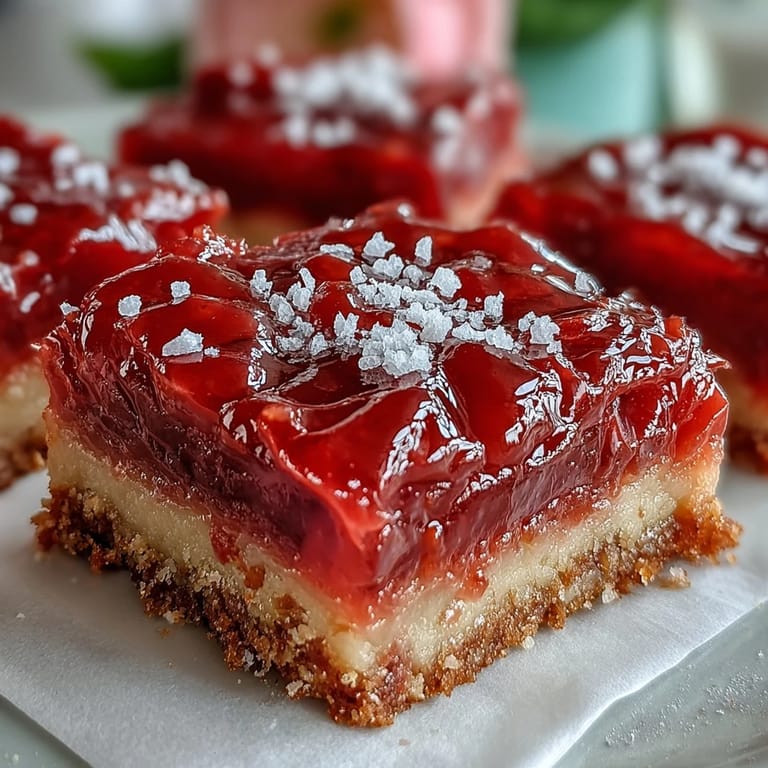
- Let the bars cool completely in the pan; dust with powdered sugar once chilled and cut into squares to serve.
 Save
Save 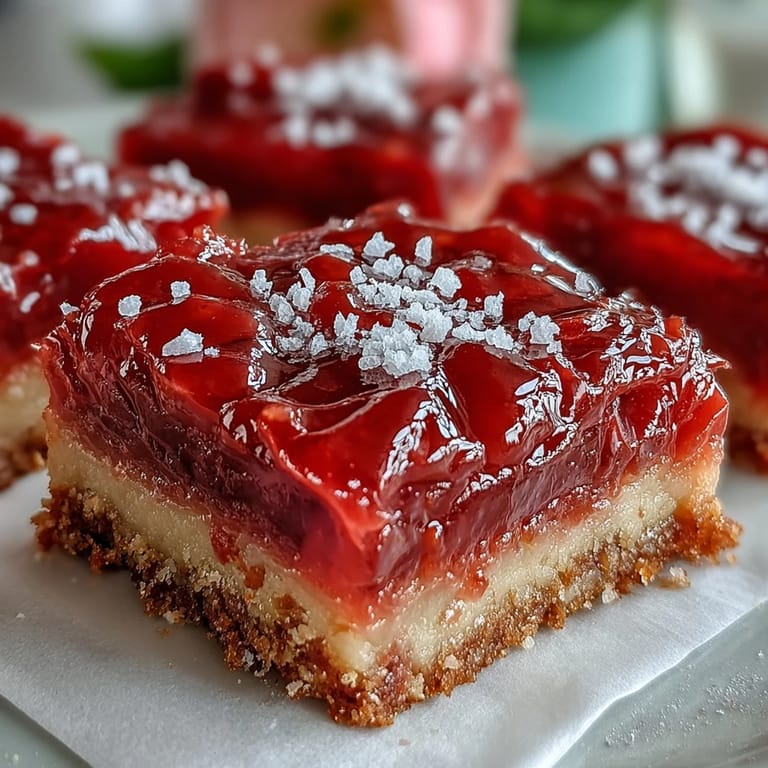 Save
Save Once, I brought these bars to a spring picnic, leaving the pan to rest on a checkered blanket. Every time someone walked by, they’d pause, drawn by the shimmer of powdered sugar or the faint pink edge of rhubarb poking through the custard. That afternoon, not a crumb came home with me—and more than one person asked for the recipe, calling these bars ‘sunshine in dessert form.’ Moments like that remind me food always tastes better outside with friends.
The Joys and Quirks of Baking with Rhubarb
The first time I cooked with rhubarb, I wrinkled my nose at its tartness until I learned the right sugar balance. Now, I love the way it softens in the oven, blushing rosy and melting into tangy pockets in every slice. My tip: don’t skip tasting a piece raw before baking—if it’s especially tart, sprinkle a touch more sugar across the layer. Some stalks are stringier than others, so peeling or trimming the tough bits goes a long way. Once you know your rhubarb, you’ll never fear its tang again.
Perfecting the Custard Texture
Custard can have a mind of its own, refusing to set or curdling when rushed. I always bring my eggs and cream to room temperature, whisking patiently so the filling pours silky smooth. If you see tiny bubbles on top before baking, tap the pan gently on the counter. The bars are ready when the outer inch is set but the center barely moves when you jiggle the pan. With a bit of practice, custard becomes the kind of friend you trust to deliver every time.
Serving & Storage Happiness
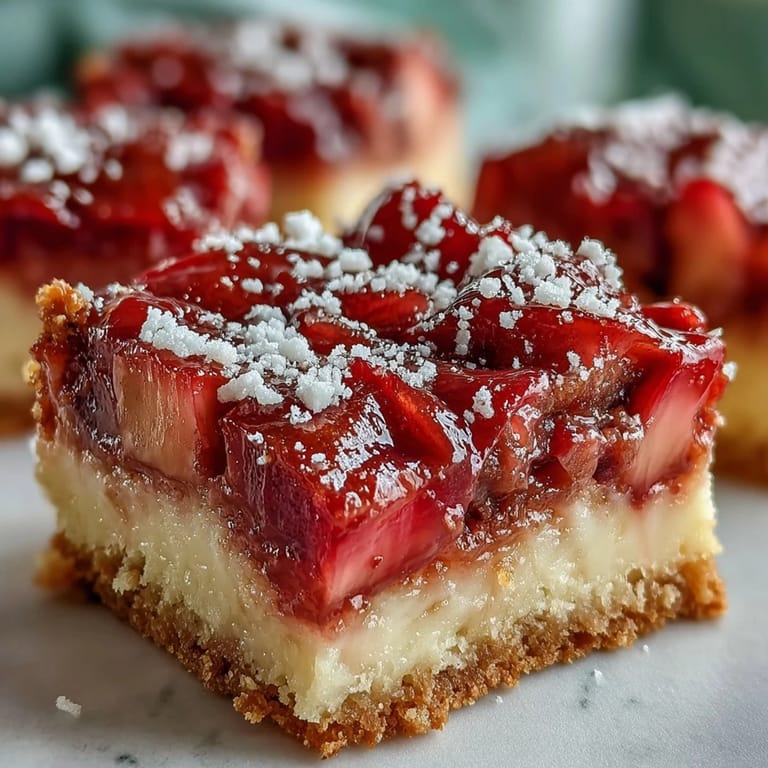
Though these bars are dreamy the day they’re made, they’re even more irresistible after a night in the fridge—especially with a cup of coffee on a lazy weekend morning.
- Line the container with parchment if stacking bars.
- For picnics, cut bars smaller to avoid gooey hands.
- Dust with extra powdered sugar before serving for fresh sparkle.
 Save
Save 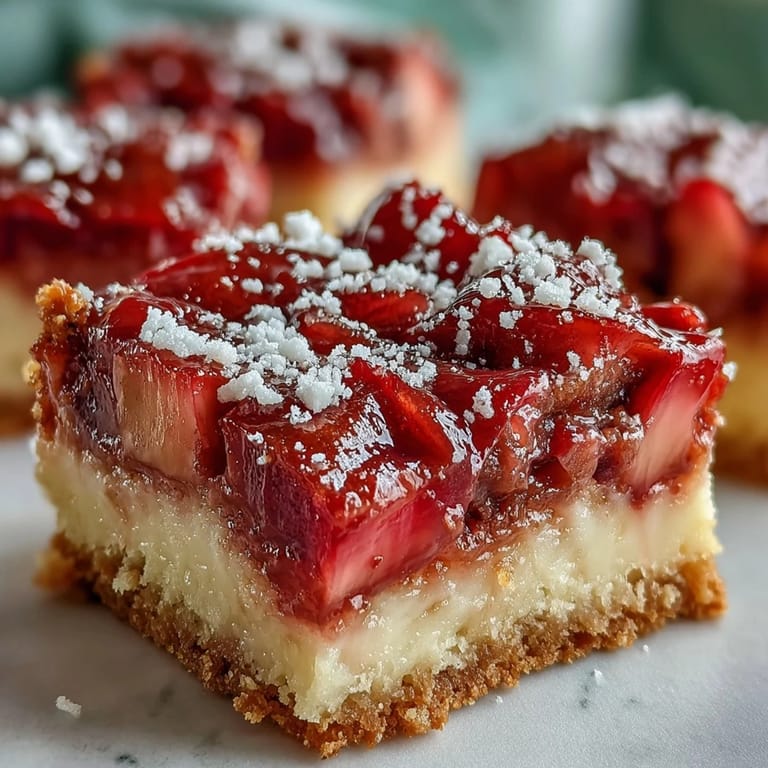 Save
Save May your kitchen fill with buttery, sweet scents and your spring days be even sweeter. Here’s to discovering joy in simple, vibrant bakes—one bite at a time.
Recipe FAQs
- → How do I prevent a soggy crust?
Blind-bake the shortbread until the edges are lightly golden to set the base, and toss chopped rhubarb with sugar to macerate and release excess juice. Spread the rhubarb evenly over the hot crust so some moisture cooks off before adding the custard.
- → Can I use frozen rhubarb?
Yes. Thaw and drain frozen rhubarb well, then pat dry to remove extra liquid. Consider tossing with a little extra sugar or a tablespoon of flour/cornstarch to help thicken juices released during baking.
- → How can I tell when the custard is set?
The custard should be mostly firm with a slight wobble in the center; the edges will look set and may pull away slightly from the pan. If using a thermometer, an internal temperature around 170–175°F indicates a gently set custard.
- → Any gluten-free adaptations for the crust?
Use a 1:1 gluten-free all-purpose flour blend in place of the all-purpose flour for the crust. Press and bake as directed; the texture will be slightly different but will still brown and hold together when cooled.
- → How should I store and reheat the bars?
Cover and refrigerate leftover bars for up to 3 days. They can be frozen uncut for about one month; thaw overnight in the fridge and bring to room temperature before serving. Serve chilled or at room temperature.
- → What are good serving suggestions?
Dust with powdered sugar and serve slices with lightly whipped cream or a scoop of vanilla ice cream. For a fresher touch, garnish with thin rhubarb ribbons or a few sliced strawberries if used as a swap.