 Save
Save The first time I attempted jambalaya, I was living in a drafty apartment with a kitchen so small the refrigerator blocked the only cabinet. I'd invited friends over and nervously doubled every spice, convinced more meant better. They still talk about that night, though mostly about how we spent three hours drinking wine while waiting for the rice to finally, actually cook.
Last winter my neighbor knocked on my door holding a bag of andouille she'd picked up on a trip to Louisiana. We ended up making jambalaya together in her tiny kitchen, swapping stories about our grandmothers' cooking while the aromas of garlic and paprika filled every corner of the apartment. Now it's the recipe I make when I need to feel like I'm somewhere warmer.
Ingredients
- Andouille sausage: This smoky Cajun sausage is nonnegotiable for authentic flavor, though smoked kielbasa will work in a pinch
- Chicken thighs: Stay tender during long simmering unlike breasts which can dry out, cut into bite sized pieces for even cooking
- Raw shrimp: Add these at the very end so they stay succulent instead of turning rubbery, peeled and deveined saves precious time
- The holy trinity: Diced onion, green bell pepper, and celery form the aromatic foundation of Creole cooking
- Long grain white rice: Rinse thoroughly until water runs clear to prevent gummy results, long grain holds its texture better than short grain varieties
- Smoked paprika: Provides deep, campfire notes without actual smoking, one of those ingredients that silently transforms the entire dish
- Dried thyme and oregano: These earthy herbs balance the heat and add complexity to the spice blend
- Cayenne pepper: Start with one teaspoon and adjust from there, the heat should be present but not overwhelming
- Diced tomatoes with juices: The liquid contributes to cooking the rice while adding acidity that cuts through the rich proteins
- Bay leaves: Subtle background flavor that makes people ask what that something is, remove before serving
Tired of Takeout? 🥡
Get 10 meals you can make faster than delivery arrives. Seriously.
One email. No spam. Unsubscribe anytime.
Instructions
- Brown the proteins first:
- Heat oil in a heavy pot or Dutch oven over medium high heat, cook sliced sausage until lightly browned then remove, brown seasoned chicken pieces in the same pot, letting them develop a golden crust on all sides
- Build the flavor base:
- Add the holy trinity of onion, bell pepper, and celery, stir occasionally until softened and fragrant, about five minutes, then add minced garlic for just sixty seconds until its perfume releases
- Toast the spices:
- Stir in the rice and all the dried spices, cook for one minute while constantly stirring, this wakes up the spice flavors and coats each grain of rice
- Add the liquid and proteins:
- Pour in the diced tomatoes with their juices and the chicken broth, use your spoon to scrape up any browned bits stuck to the bottom, return the sausage and chicken to the pot along with bay leaves
- Simmer to perfection:
- Bring everything to a boil then reduce heat to low, cover tightly and cook for twenty minutes, stir once halfway through to prevent sticking, the rice should absorb most of the liquid
- Add the shrimp finish:
- Nestle the raw shrimp into the rice, cover again and cook for five to seven minutes, they are done when they turn pink and curl slightly, taste and adjust salt if needed
- Finish and serve:
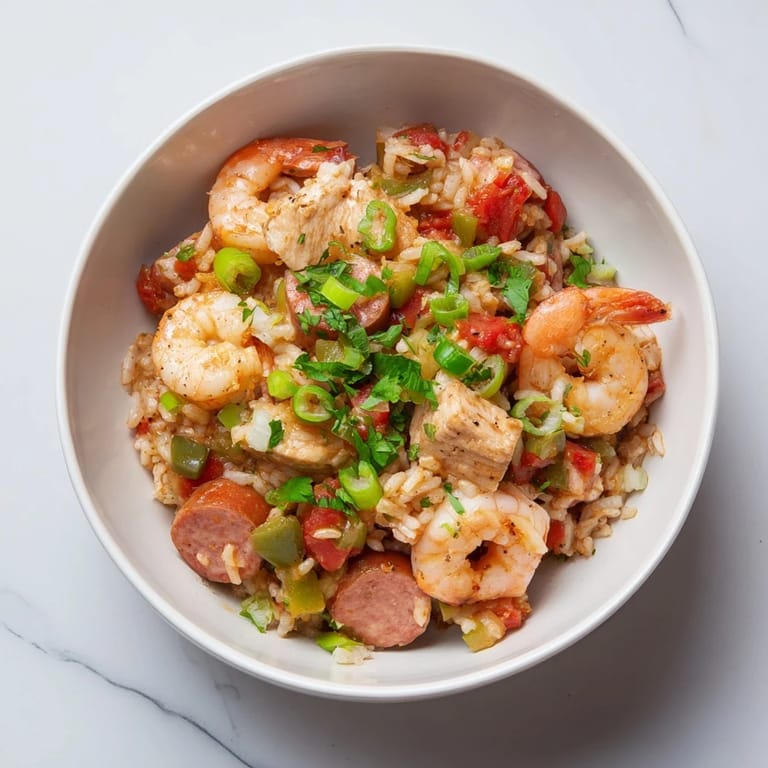
- Remove bay leaves, fluff everything with a fork, scatter fresh spring onions and parsley over the top, pass hot sauce at the table for those who want extra kick
 Save
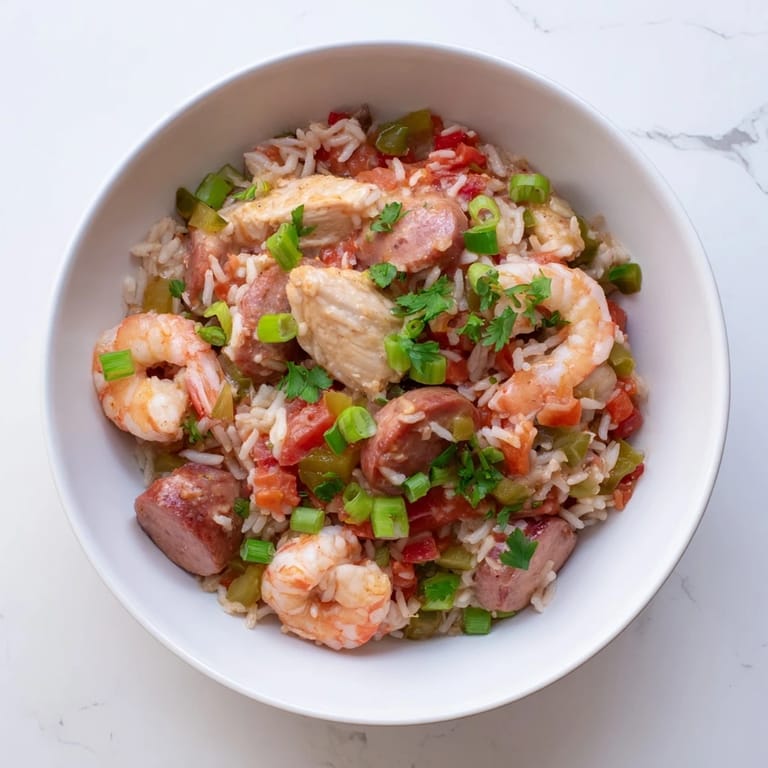
Save My uncle once attempted jambalaya for a family reunion, substituting brown rice because he read it was healthier. We ended up ordering pizza, but nobody minded because the kitchen smelled incredible and we spent hours laughing about his perfectly seasoned but eternally crunchy creation.
The Art of Rice Selection
Long grain white rice is traditional because individual grains stay separate during cooking. Short grain varieties release more starch, creating a creamy texture better suited to risotto. Jasmine rice adds floral notes while basmati brings its own aroma, either works but changes the character slightly. Whatever you choose, rinsing until the water runs clear removes excess starch that can make jambalaya gummy.
Protein Timing Matters
Each protein has its own perfect cooking time, which is why we add them in stages. The sausage needs time to render its fat and develop crisp edges, chicken requires thorough browning to build flavor, while shrimp turn from perfect to rubbery in seconds. This staggered approach means every component reaches its best texture simultaneously instead of some elements overcooking while others finish.
Building Heat Levels
Cajun cooking balances heat with flavor, not just pure fire. The cayenne provides backbone heat, andouille contributes smoky spiciness, while hot sauce at the table lets guests customize. Start with the recommended amounts, then adjust the cayenne up or down based on your tolerance. Remember that the heat will mellow slightly as leftovers sit, so spicier versions often taste more balanced the next day.
- Taste a small piece of sausage before adding it to gauge its built-in heat level
- Soak cayenne in a tablespoon of warm water for 10 minutes before adding for a mellower heat
- Serve cooling elements like crusty bread or a simple cucumber salad to balance the spice
 Save
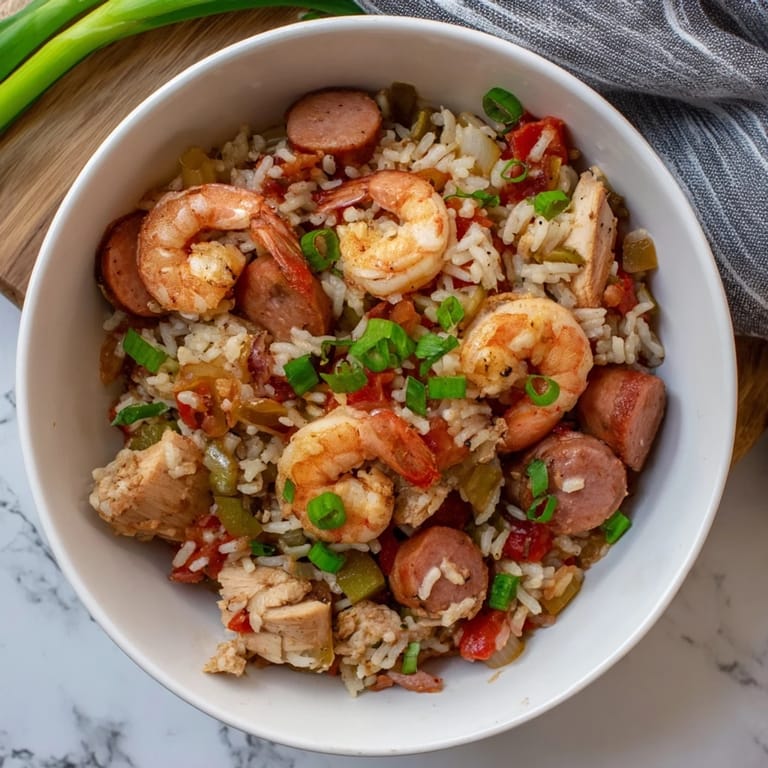
Save There is something deeply satisfying about a one pot meal that feeds a crowd and only gets better with time, the kind of dish that brings people to the kitchen asking what smells so good.
Recipe FAQs
- → What makes authentic Creole jambalaya different from Cajun style?
Creole jambalaya includes tomatoes, giving it a reddish color and slightly tangier flavor profile, while traditional Cajun version omits tomatoes for a browner appearance. This Creole style incorporates diced tomatoes with their juices, creating a richer base that helps cook the rice to perfection.
- → Can I prepare this dish ahead of time?
Jambalaya actually develops deeper flavors when made ahead. Prepare the entire dish, then cool completely and refrigerate for up to 2 days. Reheat gently on the stovetop, adding a splash of broth or water to loosen the rice. The flavors will have melded beautifully overnight.
- → What type of rice works best for jambalaya?
Long-grain white rice is traditional because it stays fluffy and separate during cooking. Avoid short-grain or Arborio rice, which becomes too sticky. Rinse the rice thoroughly before adding to remove excess starch—this prevents gumminess and ensures each grain remains distinct.
- → How can I adjust the spice level?
The cayenne pepper provides base heat, but you have several options for customization. Start with half the suggested cayenne for milder flavor, or increase up to 2 teaspoons for more kick. Adding hot sauce at the table lets diners personalize their servings. Diced jalapeños or serranos can be sautéed with the vegetables for additional layers of heat.
- → What are suitable substitutions for andouille sausage?
Smoked kielbasa offers similar smokiness and texture. Spanish chorizo adds a different but complementary spicy element. For a lighter option, turkey kielbasa works well. Vegetarians can use plant-based sausage crumbles or extra vegetables—though you'll miss the signature smoky depth that andouille provides.
- → Why is my rice still crunchy after cooking?
Cover the pot tightly and cook over very low heat—too high heat evaporates liquid before rice finishes. If still crunchy after 20 minutes, add ¼ cup hot broth, cover, and cook 5 more minutes. Different rice brands absorb liquid at varying rates, so don't hesitate to add more liquid if needed.